




























All courses

Computer courses in Ludhiana, in one place.

Programming, AI and data, digital marketing, cyber and cloud, design and drafting, and the training formats universities ask for. Filter by category or search for the skill you are after.

  • 0Courses & programmes
  • 0Categories
  • 0+Projects per course
  • 0K+Learners trained

Every course at a glance

33/65

Learn app testing and QA with live projects, real test cycles, and placement support. Small batches, mentor-reviewed bug reports, and interview prep included. App Development · 3,6, or 9 Months

Open Learn app testing and QA with live projects, real test cycles, and placement support. Small batches, mentor-reviewed bug reports, and interview prep included.

The catalogue

65 courses, one filter

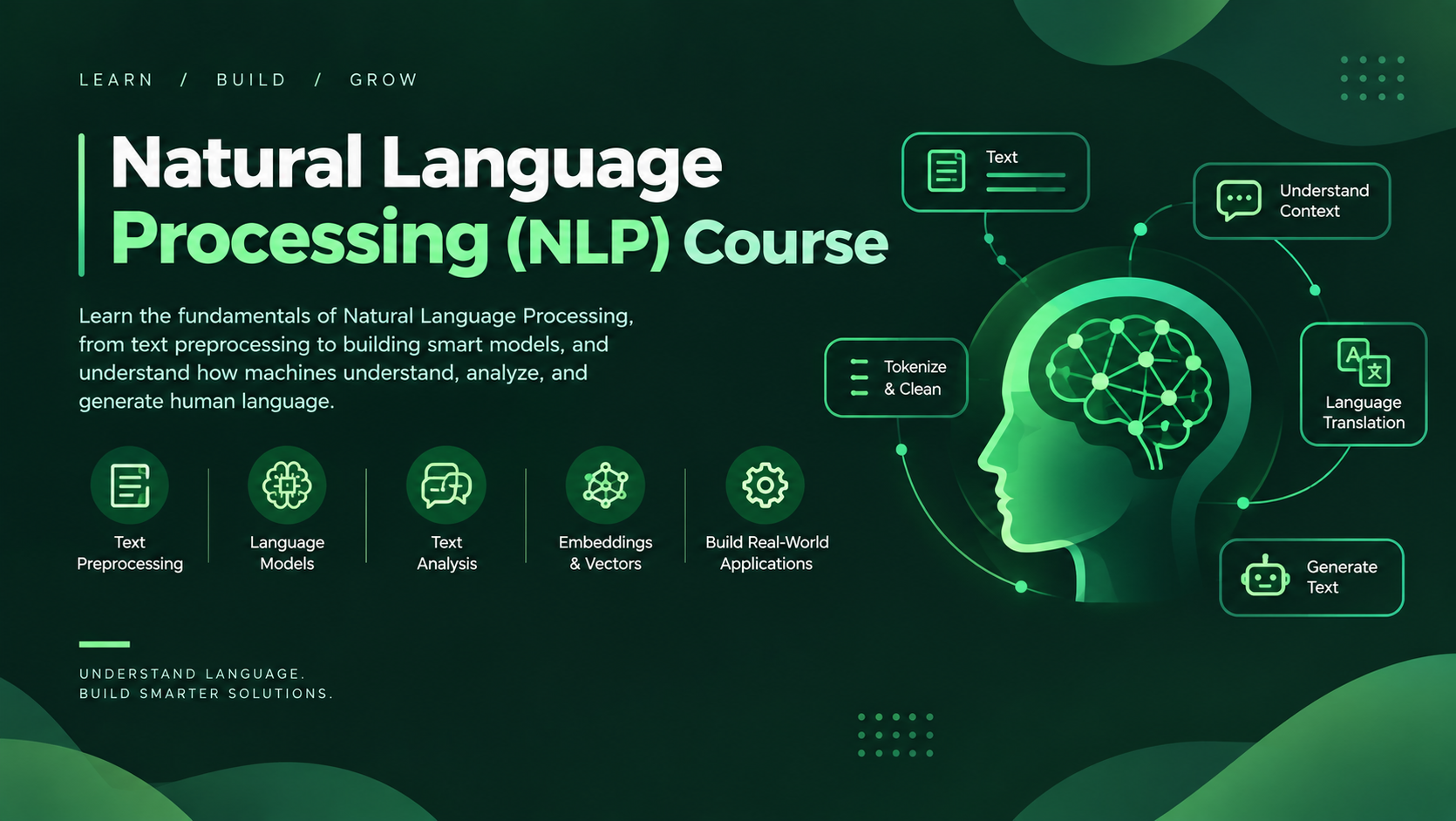
  • Learn NLP in Ludhiana with live projects, mentor review, and placement support. Master text processing, embeddings, sequence models, and deep learning.

    Learn NLP in Ludhiana with live projects, mentor review, and placement support. Master text processing, embeddings, sequence models, and deep learning.

    What NLP Actually Is Natural Language Processing is the branch of AI that teaches machines to understand, interpret, and generate human language. It covers everything from cleaning raw text and building word embeddings to training sequence models and transformers. In Ludhiana's tech market, companies aren't just looking for people who can run a sentiment analysis script — they need engineers who can build production NLP pipelines for chatbots, document processing, and search. Why This Matters in Ludhiana Right Now Ludhiana's IT sector is growing, and so is demand for language AI. Local businesses are using NLP for customer support automation, feedback analysis, and document extraction, and they need engineers who can build these systems. This creates a demand for NLP professionals who can clean text, train models, and deploy pipelines. Learning NLP here means you are training for roles that actually exist in the local market, not just theoretical positions. How techcadd's Approach Is Different Most courses teach you the theory and then stop. At techcadd, every module includes a deliverable that goes into your portfolio. You don't just learn what a word embedding is — you train one. You don't just study sequence models — you build an NLP model with attention. The syllabus is structured so that each module builds on the last, and the final capstone is a complete NLP pipeline that you can show to employers. The 3-month Practitioner plan covers Python, data structures, NumPy, Pandas, data visualisation, and machine learning fundamentals. The 6-month Professional plan adds deep learning, NLP, computer vision, deployment, and an end-to-end capstone. The 9-month Expert plan completes the ladder with unsupervised learning, deep learning specialisation, NLP, sequence models, and computer vision. Each stage has its own capstone, so you leave with a portfolio that demonstrates your progress, not just a certificate.

    • 7 modules
    • 3,6 or 9 months
    Show more
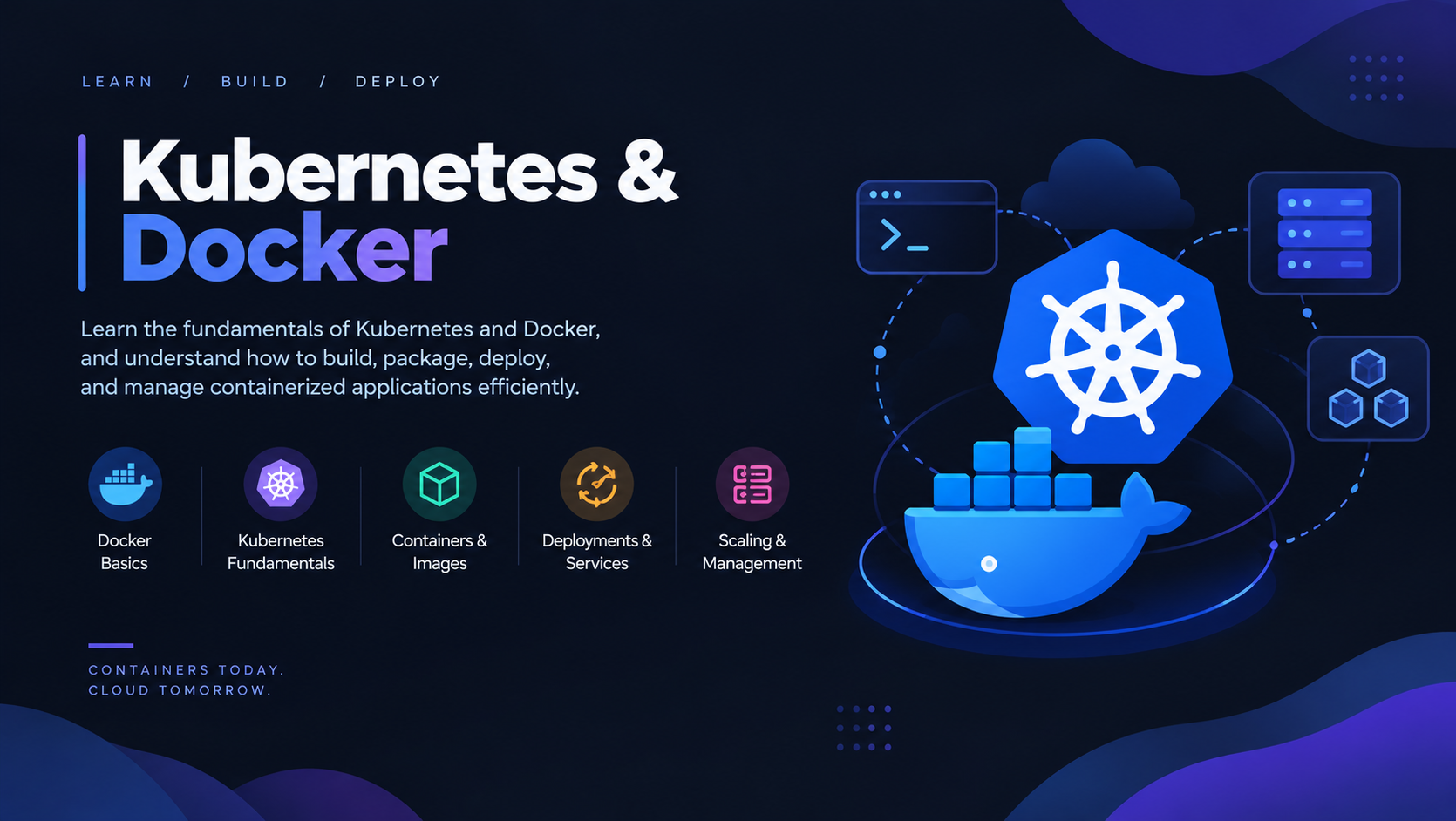
  • Learn Kubernetes & Docker in Ludhiana with hands-on labs, live projects, and placement support. Master containers, orchestration, and production deployments.

    Learn Kubernetes & Docker in Ludhiana with hands-on labs, live projects, and placement support. Master containers, orchestration, and production deployments.

    What Kubernetes & Docker Actually Are Docker is a tool that packages applications and their dependencies into containers, so they run the same way on any machine. Kubernetes is the orchestration system that manages those containers at scale — handling deployment, scaling, and recovery automatically. In Ludhiana's tech market, companies aren't just looking for people who can run a container — they need engineers who can deploy, scale, and operate containerised applications in production. Why This Matters in Ludhiana Right Now Ludhiana's IT sector is growing, and so is container adoption. Local businesses are moving from traditional servers to containers and Kubernetes clusters, and they need engineers who can manage these environments. This creates a demand for Docker and Kubernetes professionals who can build images, deploy workloads, and keep clusters running. Learning these tools here means you are training for roles that actually exist in the local market, not just theoretical positions. How techcadd's Approach Is Different Most courses teach you the theory and then stop. At techcadd, every module includes a deliverable that goes into your portfolio. You don't just learn what a Dockerfile is — you build a multi-stage image. You don't just study Kubernetes — you deploy a real workload to an EKS cluster. The syllabus is structured so that each module builds on the last, and the final capstone is a complete containerised deployment that you can show to employers.

    • 5 modules
    • 3,6 or 9 months
    Show more
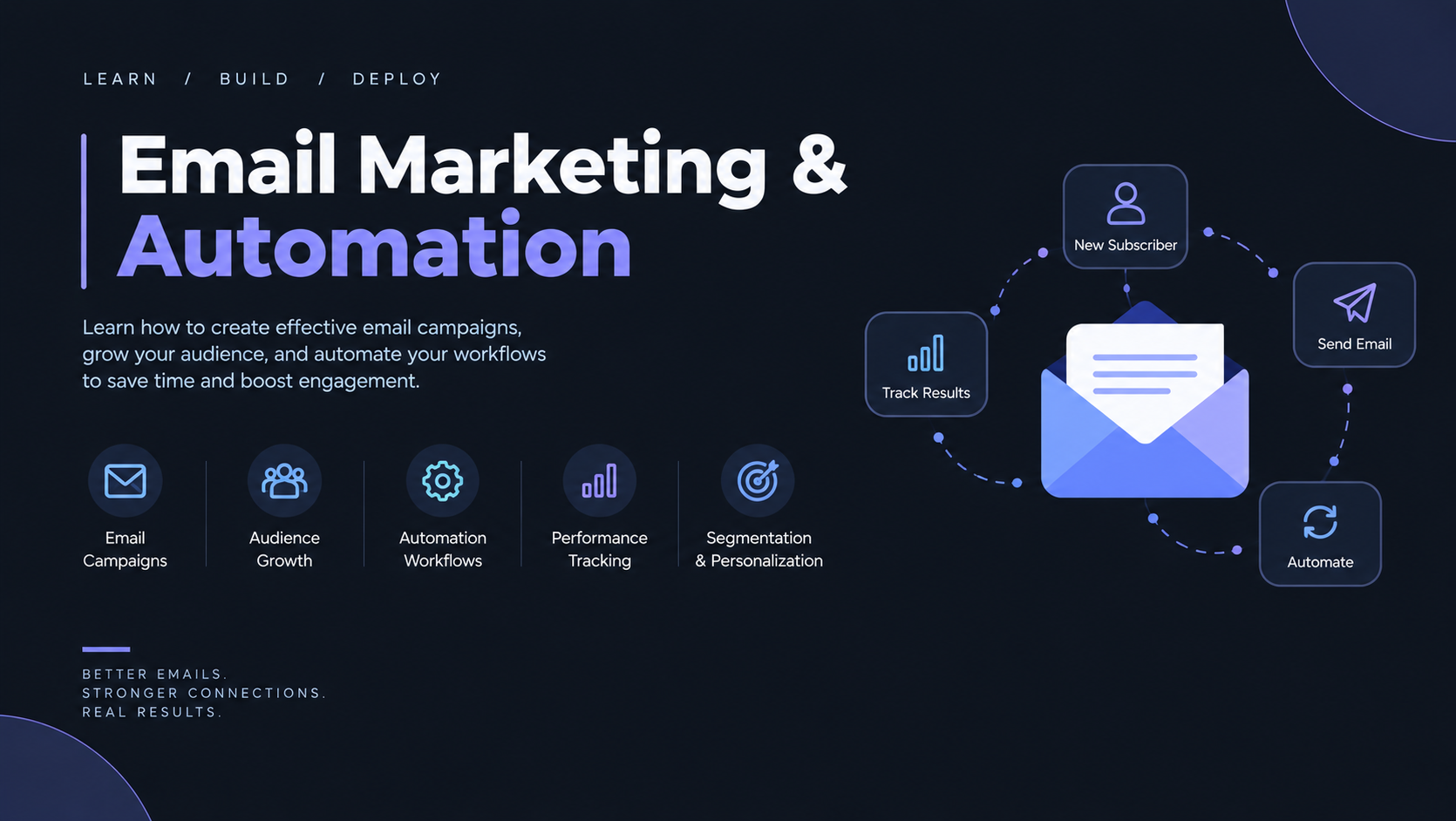
  • Learn Email Marketing & Automation in Ludhiana with live projects, mentor review, and placement support. Master campaigns, funnels, and automation.

    Learn Email Marketing & Automation in Ludhiana with live projects, mentor review, and placement support. Master campaigns, funnels, and automation.

    What Email Marketing & Automation Actually Is Email marketing is the practice of building and sending email campaigns that nurture leads, convert customers, and retain buyers. Automation takes this further by triggering the right email at the right time based on user behaviour. In Ludhiana's digital market, companies aren't just looking for people who can send newsletters — they need marketers who can build funnels, segment audiences, and set up automation workflows that run without manual effort. Why This Matters in Ludhiana Right Now Ludhiana's D2C and e-commerce sector is growing, and so is the need for owned marketing channels. Local brands are moving away from depending only on paid ads and building email lists that they control. This creates a demand for email marketing professionals who can build campaigns, automate follow-ups, and track performance. Learning email marketing here means you are training for roles that actually exist in the local market, not just theoretical positions. How techcadd's Approach Is Different Most courses teach you the theory and then stop. At techcadd, every module includes a deliverable that goes into your portfolio. You don't just learn what a funnel is — you build one. You don't just study automation — you set up a live workflow. The syllabus is structured so that each module builds on the last, and the final capstone is a complete email marketing system that you can show to employers. The 3-month Fast Track covers the core fundamentals: digital marketing basics, content strategy, analytics, and hands-on projects. The 6-month Professional Track adds advanced strategies, live projects, and portfolio building. The 9-month Master Track completes the ladder with advanced AI and automation, agency-level projects, and freelancing or placement support. Each stage has its own capstone, so you leave with a portfolio that demonstrates your progress, not just a certificate.

    • 8 modules
    • 3,6 or 9 months
    Show more
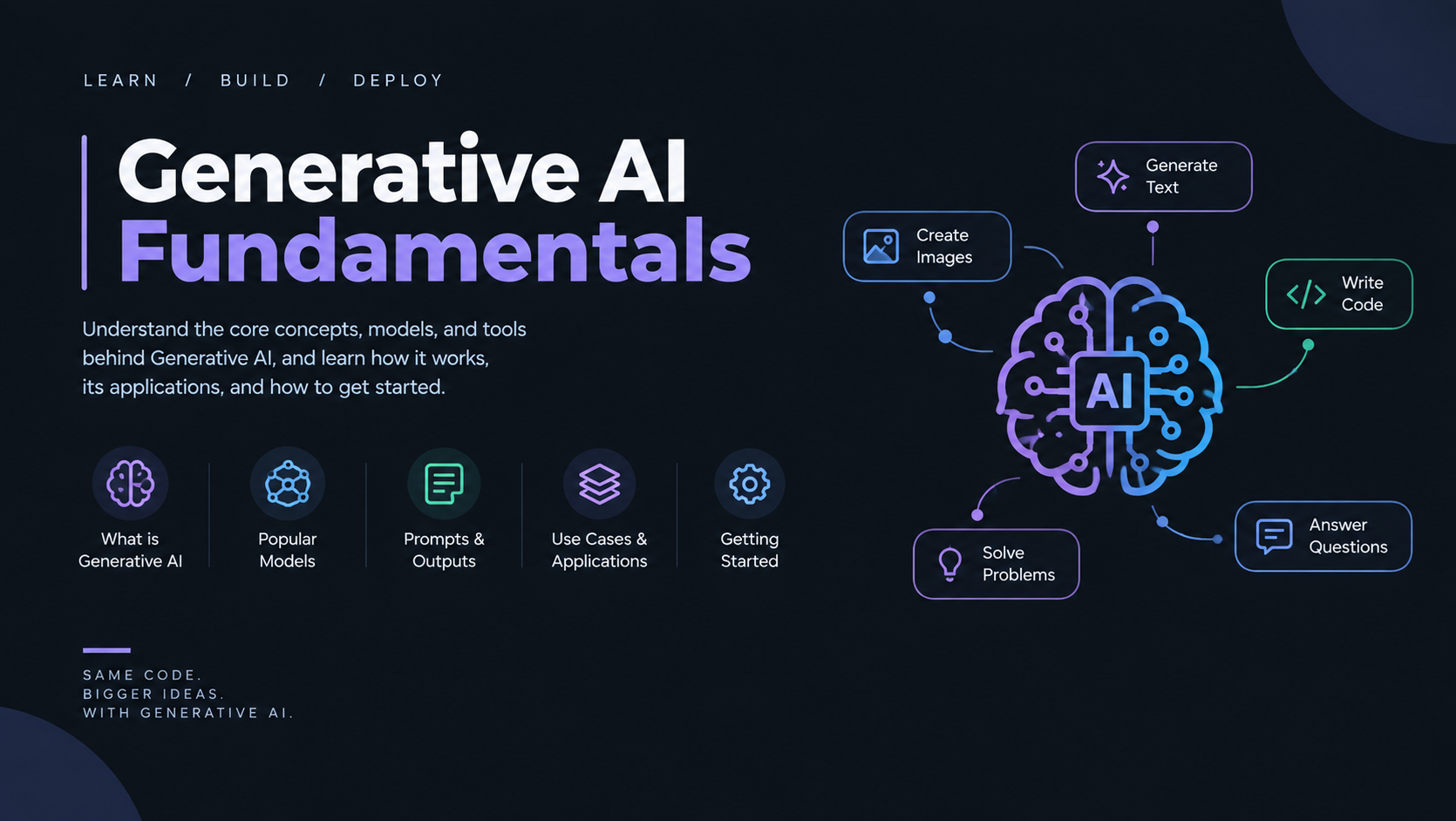
  • Learn Generative AI Fundamentals in Ludhiana with live projects, mentor review, and placement support. Master LLMs, prompt engineering, RAG, and GenAI.

    Learn Generative AI Fundamentals in Ludhiana with live projects, mentor review, and placement support. Master LLMs, prompt engineering, RAG, and GenAI.

    What Generative AI Actually Is Generative AI is the practice of building systems that create new content — text, images, code, and more — using large language models and diffusion models. It covers everything from prompt engineering to retrieval-augmented generation (RAG) and multi-modal AI. In Ludhiana's tech market, companies aren't just looking for people who know how to use ChatGPT — they need professionals who can build GenAI applications using APIs, vector databases, and agentic frameworks. Why This Matters in Ludhiana Right Now Ludhiana's IT sector is growing, and so is GenAI adoption. Local businesses are using generative AI for customer support, content generation, and document processing, and they need developers who can build these systems. This creates a demand for generative AI professionals who can integrate LLMs, design prompts, and build RAG pipelines. Learning generative AI here means you are training for roles that actually exist in the local market, not just theoretical positions. How techcadd's Approach Is Different Most courses teach you the theory and then stop. At techcadd, every module includes a deliverable that goes into your portfolio. You don't just learn what an LLM is — you build an app with one. You don't just study RAG — you build a document assistant. The syllabus is structured so that each module builds on the last, and the final capstone is a complete GenAI application that you can show to employers. The 3-month Practitioner plan covers Python, data structures, NumPy, Pandas, data visualisation, machine learning fundamentals, and advanced machine learning. The 6-month Professional plan adds deep learning, NLP, computer vision, deployment, and an end-to-end capstone. The 9-month Expert plan completes the ladder with unsupervised learning, generative AI, RAG, advanced GenAI, AI application development, MLOps, vector databases, prompt engineering, multi-agent systems, and real-world AI solutions. Each stage has its own capstone, so you leave with a portfolio that demonstrates your progress, not just a certificate.

    • 7 modules
    • 3,6 or 9 months
    Show more
  • Learn WordPress Development Basics in Ludhiana with live projects, mentor review, and placement support. Master themes, plugins, and site deployment.

    Learn WordPress Development Basics in Ludhiana with live projects, mentor review, and placement support. Master themes, plugins, and site deployment.

    What WordPress Development Actually Is WordPress is a content management system that powers a large share of the web. It lets you build websites, blogs, and e-commerce stores without writing every line of code from scratch. In Ludhiana's market, businesses aren't just looking for people who can install WordPress — they need developers who can set up themes, configure plugins, customise layouts, and deploy a working site. Why This Matters in Ludhiana Right Now Ludhiana's business and agency sector is growing, and so is the demand for websites. Local shops, manufacturers, and service businesses are moving online, and they need websites that look professional and work reliably. This creates a demand for WordPress developers who can build, configure, and deploy sites. Learning WordPress here means you are training for roles that actually exist in the local market, not just theoretical positions. How techcadd's Approach Is Different Most courses teach you the theory and then stop. At techcadd, every module includes a deliverable that goes into your portfolio. You don't just learn what a theme is — you install and customise one. You don't just study plugins — you configure a working contact form and SEO plugin. The syllabus is structured so that each module builds on the last, and the final capstone is a complete WordPress site that you can show to employers. The 3-month Practitioner plan covers the fundamentals: web basics, HTML, CSS, Bootstrap, JavaScript, and Python programming. The 6-month Professional plan adds AI-assisted development, Git, testing, REST APIs, cloud deployment, and third-party integrations. The 9-month Expert plan completes the ladder with AI chatbots, CI/CD pipelines, system design, and enterprise-level capstones. Each stage has its own capstone, so you leave with a portfolio that demonstrates your progress, not just a certificate.

    • 7 modules
    • 3,6 or 9 months
    Show more
  • Learn Multi-Cloud Management in Ludhiana with hands-on labs, live projects, and placement support. Master AWS, Azure, automation, and cloud operations.

    Learn Multi-Cloud Management in Ludhiana with hands-on labs, live projects, and placement support. Master AWS, Azure, automation, and cloud operations.

    What Multi-Cloud Management Actually Is Multi-cloud management is the practice of running and securing workloads across more than one cloud provider — typically AWS, Azure, and Google Cloud. It covers everything from Linux and networking fundamentals to infrastructure as code, containers, CI/CD, and monitoring. In Ludhiana's tech market, companies aren't just looking for people who know one cloud — they need professionals who can work across providers, automate deployments, and keep costs under control. Why This Matters in Ludhiana Right Now Ludhiana's IT sector is growing, and so is cloud adoption. Local businesses are moving workloads to AWS, Azure, and Google Cloud, and they need professionals who can manage these environments and avoid vendor lock-in. This creates a demand for multi-cloud professionals who can build, deploy, and monitor across providers. Learning multi-cloud management here means you are training for roles that actually exist in the local market, not just theoretical positions. How techcadd's Approach Is Different Most courses teach you one cloud and then stop. At techcadd, every module includes a deliverable that goes into your portfolio. You don't just learn what a VPC is — you build one. You don't just study Terraform — you write modules that provision real infrastructure. The syllabus is structured so that each module builds on the last, and the final capstone is a complete multi-cloud deployment that you can show to employers. The 3-month Foundation track covers Linux, networking, AWS core services, and cloud security basics. The 6-month Professional track adds advanced AWS operations, AI foundations, Docker, Jenkins CI/CD, Terraform, and monitoring. The 9-month Expert track completes the ladder with cloud architecture, AWS security engineering, Kubernetes operations, infrastructure automation, and an expert capstone. Each stage has its own capstone, so you leave with a portfolio that demonstrates your progress, not just a certificate.

    • 17 modules
    • 3,6 or 9 months
    Show more
  • Learn Flutter Cross-Platform in Ludhiana with live projects, mentor review, and placement support. Build Android, iOS, and web apps with Dart and AI.

    Learn Flutter Cross-Platform in Ludhiana with live projects, mentor review, and placement support. Build Android, iOS, and web apps with Dart and AI.

    What Flutter Cross-Platform Actually Is Flutter is a framework that lets you build one app that runs on Android, iOS, and the web from a single codebase. It uses Dart as the programming language and gives you a complete toolkit for UI, state management, and deployment. In Ludhiana's tech market, companies aren't just looking for people who know mobile development — they need developers who can ship apps across platforms quickly and maintain them cleanly. Why This Matters in Ludhiana Right Now Ludhiana's startup and D2C sector is growing, and so is the demand for mobile apps. Local businesses are building apps for e-commerce, delivery, and customer engagement, and they need developers who can ship to both Android and iOS without doubling the work. This creates a demand for Flutter developers who can build, integrate APIs, and deploy real apps. Learning Flutter here means you are training for roles that actually exist in the local market, not just theoretical positions. How techcadd's Approach Is Different Most courses teach you the theory and then stop. At techcadd, every module includes a deliverable that goes into your portfolio. You don't just learn what a widget is — you build a working app screen. You don't just study state management — you manage state in a real app. The syllabus is structured so that each module builds on the last, and the final capstone is a complete production app that you can show to employers. The 3-month Practitioner plan covers the fundamentals: Dart, Flutter UI, state management, asynchronous programming, Firebase integration, and a production capstone. The 6-month Professional plan adds platform integration, advanced Dart features, architecture patterns, performance optimisation, AI integration, on-device ML, publishing, and Flutter plugins. The 9-month Expert plan completes the ladder with AI/LLM integration, agentic features, backend, CI/CD, app store, monetisation, analytics, and client delivery. Each stage has its own capstone, so you leave with a portfolio that demonstrates your progress, not just a certificate.

    • 7 modules
    • 3,6 or 9 months
    Show more
  • Learn Digital Forensics Basics in Ludhiana with hands-on labs, live projects, and placement support. Master evidence handling, disk and memory analysis.

    Learn Digital Forensics Basics in Ludhiana with hands-on labs, live projects, and placement support. Master evidence handling, disk and memory analysis.

    What Digital Forensics Actually Is Digital forensics is the practice of investigating cyber incidents by collecting, preserving, and analysing digital evidence. It covers everything from handling a hard drive correctly to analysing memory dumps and writing a forensic report that stands up to scrutiny. In Ludhiana's tech market, companies aren't just looking for people who know security theory — they need professionals who can investigate an incident, preserve evidence properly, and document findings clearly. Why This Matters in Ludhiana Right Now Ludhiana's IT sector is growing, and so is the threat landscape. Local businesses are facing ransomware, data breaches, and insider threats, and they need professionals who can investigate what happened and how. This creates a demand for digital forensics professionals who can handle evidence, analyse systems, and produce reports. Learning digital forensics here means you are training for roles that actually exist in the local market, not just theoretical positions. How techcadd's Approach Is Different Most courses teach you the theory and then stop. At techcadd, every module includes a deliverable that goes into your portfolio. You don't just learn what a disk image is — you acquire one and analyse it. You don't just study memory forensics — you analyse a real memory dump. The syllabus is structured so that each module builds on the last, and the final capstone is a complete forensic investigation that you can show to employers. The 3-month Practitioner plan covers the fundamentals: cybersecurity basics, operating systems, networking, and information gathering. The 6-month Professional plan adds ethical hacking, cloud security, Python automation, SOC operations, and AI-assisted security. The 9-month Expert plan completes the ladder with network architecture, advanced SOC and DFIR skills, and a full capstone project. Digital forensics itself is introduced in Module 19 of the Professional plan and explored further in the Expert plan. Each stage has its own capstone, so you leave with a portfolio that demonstrates your progress, not just a certificate.

    • 24 modules
    • 3,6 or 9 months
    Show more
  • Learn Influencer Marketing Basics in Ludhiana with live projects, mentor review, and placement support. Master creator partnerships, campaigns, and analytics.

    Learn Influencer Marketing Basics in Ludhiana with live projects, mentor review, and placement support. Master creator partnerships, campaigns, and analytics.

    What Influencer Marketing Actually Is Influencer marketing is the practice of partnering with content creators to promote a brand's products or services to their audience. It covers everything from finding the right creators to negotiating deliverables, briefing them, and tracking campaign performance. In Ludhiana's market, brands aren't just looking for people who can post on Instagram — they need marketers who can identify the right creators, build partnerships, and measure real business results. Why This Matters in Ludhiana Right Now Ludhiana's D2C and retail sector is growing, and so is the creator economy. Local brands are moving from traditional advertising to creator-led campaigns, and they need marketers who can run these partnerships professionally. This creates a demand for influencer marketing professionals who can manage campaigns end to end. Learning influencer marketing here means you are training for roles that actually exist in the local market, not just theoretical positions. How techcadd's Approach Is Different Most courses teach you the theory and then stop. At techcadd, every module includes a deliverable that goes into your portfolio. You don't just learn what an influencer is — you build a creator shortlist and outreach plan. You don't just study campaigns — you plan and report on a live campaign. The syllabus is structured so that each module builds on the last, and the final capstone is a complete influencer campaign that you can show to employers. The 3-month Fast Track covers the core fundamentals: digital marketing basics, social media platforms, content strategy, and essential tools. The 6-month Professional Track adds advanced strategies, live projects, and portfolio building. The 9-month Master Track completes the ladder with advanced AI and automation, agency-level projects, and freelancing or placement support. Each stage has its own capstone, so you leave with a portfolio that demonstrates your progress, not just a certificate.

    • 8 modules
    • 3,6 or 9 months
    Show more
  • Learn Responsible AI & Ethics in Ludhiana with live projects, mentor review, and placement support. Master AI governance, bias detection, and ethical deployment.

    Learn Responsible AI & Ethics in Ludhiana with live projects, mentor review, and placement support. Master AI governance, bias detection, and ethical deployment.

    What Responsible AI & Ethics Actually Is Responsible AI is the practice of building and deploying artificial intelligence systems that are fair, transparent, accountable, and safe. It covers everything from detecting bias in training data to explaining model decisions and ensuring compliance with regulations. In Ludhiana's tech market, companies aren't just looking for people who can build AI models — they need professionals who can ensure those models don't discriminate, can be explained to stakeholders, and meet ethical and legal standards. Why This Matters in Ludhiana Right Now Ludhiana's IT sector is growing, and so is AI adoption. Local businesses are using AI for customer service, credit scoring, and hiring, and they need to ensure these systems are fair and compliant. This creates a demand for responsible AI professionals who can audit AI systems, detect bias, and implement governance frameworks. Learning responsible AI here means you are training for roles that actually exist in the local market, not just theoretical positions. How techcadd's Approach Is Different Most courses teach you the theory and then stop. At techcadd, every module includes a deliverable that goes into your portfolio. You don't just learn what bias is — you detect it in a real dataset. You don't just study explainability — you build a model card and explain a model's decisions. The syllabus is structured so that each module builds on the last, and the final capstone is a complete responsible AI audit that you can show to employers. The 3-month Foundation plan covers Python, data analytics, machine learning basics, and an introduction to generative AI. The 6-month Professional plan adds deep learning, computer vision, NLP, generative AI, and agentic AI application development, closing with a portfolio project. The 9-month Advanced Expert plan completes the ladder with SQL, Power BI, deployment frameworks, a major project, and a dedicated Responsible AI & Ethics module covering governance, bias detection, fairness, and explainability. Each stage has its own capstone, so you leave with a portfolio that demonstrates your progress, not just a certificate.

    • 9 modules
    • 3,6 or 9 months
    Show more
  • Learn Cloud Security & Compliance in Ludhiana with hands-on labs, live projects, and placement support. Master AWS security, IAM, and DevSecOps.

    Learn Cloud Security & Compliance in Ludhiana with hands-on labs, live projects, and placement support. Master AWS security, IAM, and DevSecOps.

    What Cloud Security & Compliance Actually Is Cloud security is the practice of protecting data, applications, and infrastructure that run in cloud environments like AWS, Azure, and Google Cloud. It covers everything from identity and access management (IAM) to encryption, monitoring, and incident response. In Ludhiana's tech market, companies aren't just looking for people who know cloud theory — they need professionals who can configure IAM policies, set up security monitoring, and respond to cloud incidents using real tools. Why This Matters in Ludhiana Right Now Ludhiana's IT sector is growing, and so is cloud adoption. Local businesses are moving their workloads to AWS and Azure, and manufacturing units are connecting their operations to the cloud. This creates a demand for cloud security professionals who can secure cloud environments, meet compliance requirements, and respond to incidents. Learning cloud security here means you are training for roles that actually exist in the local market, not just theoretical positions. How techcadd's Approach Is Different Most courses teach you the theory and then stop. At techcadd, every module includes a deliverable that goes into your portfolio. You don't just learn what IAM is — you configure it. You don't just study security monitoring — you set up GuardDuty and Security Hub in a live AWS account. The syllabus is structured so that each module builds on the last, and the final capstone is a complete cloud security deployment that you can show to employers. The 3-month Foundation Track covers the fundamentals: Linux, networking, AWS core services, and cloud security basics. The 6-month Professional Track adds advanced AWS operations, AI foundations, Docker, Jenkins CI/CD, Terraform, and monitoring. The 9-month Expert Track completes the ladder with cloud architecture, AWS security engineering, Kubernetes operations, infrastructure automation, and an expert capstone. Each stage has its own capstone, so you leave with a portfolio that demonstrates your progress, not just a certificate.

    • 17 modules
    • 3,6 or 9 months
    Show more
  • Learn Network Security Essentials in Ludhiana with hands-on labs, live projects, and placement support. Master firewalls, VPNs, and SOC operations.

    Learn Network Security Essentials in Ludhiana with hands-on labs, live projects, and placement support. Master firewalls, VPNs, and SOC operations.

    What Network Security Actually Is Network security is the practice of protecting a company's computer networks from unauthorised access, misuse, and attacks. It covers everything from configuring firewalls and VPNs to monitoring network traffic for suspicious activity. In Ludhiana's tech market, companies aren't just looking for people who know security theory — they need professionals who can configure a firewall, set up a VPN, and investigate a security incident using real tools. Why This Matters in Ludhiana Right Now Ludhiana's IT sector is growing, and so is the threat landscape. Local businesses are moving their operations online, and manufacturing units are connecting their shop floors to the internet. This creates a demand for network security professionals who can secure industrial control systems, protect customer data, and respond to incidents. Learning network security here means you are training for roles that actually exist in the local market, not just theoretical positions. How techcadd's Approach Is Different Most courses teach you the theory and then stop. At techcadd, every module includes a deliverable that goes into your portfolio. You don't just learn what a firewall is — you configure one. You don't just study intrusion detection — you analyse real network traffic in a SOC lab. The syllabus is structured so that each module builds on the last, and the final capstone is a complete security deployment that you can show to employers. The 3-month Practitioner plan covers the fundamentals: network basics, operating systems, VPNs, and security essentials. The 6-month Professional plan adds ethical hacking, cloud security, SOC operations, and AI-assisted security. The 9-month Expert plan completes the ladder with network architecture, capstone projects, and advanced SOC and DFIR skills. Each stage has its own capstone, so you leave with a portfolio that demonstrates your progress, not just a certificate.

    • 7 modules
    • 3,6 or 9 months
    Show more
  • Learn JavaScript Frameworks in Ludhiana with live projects, mentor review, and placement support. Master React, Node.js, and modern web development.

    Learn JavaScript Frameworks in Ludhiana with live projects, mentor review, and placement support. Master React, Node.js, and modern web development.

    mework's building blocks to handle routing, data flow, and user interface updates. In Ludhiana's tech market, companies aren't just looking for people who know JavaScript syntax — they need developers who can build a complete, working application using React on the front end and Node.js on the back end. Why This Matters in Ludhiana Right Now Ludhiana's IT sector is growing. Local businesses are moving from static websites to full web applications, and they need developers who can build them. The city's proximity to industrial hubs means there is a steady demand for e-commerce platforms, inventory management systems, and customer-facing dashboards. Learning JavaScript frameworks here means you are training for roles that actually exist in the local market, not just theoretical positions. How techcadd's Approach Is Different Most courses teach you the syntax and then stop. At techcadd, every module includes a deliverable that goes into your portfolio. You don't just learn what React is — you build a functional React application. You don't just study Node.js — you deploy a REST API. The syllabus is structured so that each module builds on the last, and the final capstone is a full-stack application that you can show to employers. The 3-month Practitioner plan covers the fundamentals: HTML, CSS, JavaScript, Python, and Django. The 6-month Professional plan adds AI-assisted development, Git, testing, REST frameworks, and cloud deployment. The 9-month Expert plan completes the ladder with AI chatbots, CI/CD pipelines, system design, and real-time features. Each stage has its own capstone, so you leave with a portfolio that demonstrates your progress, not just a certificate.

    • 25 modules
    • 3,6 or 9 months
    Show more
  • Learn Android app development with Kotlin, Jetpack Compose, and live projects. Mentor-reviewed builds, device testing, and placement support in Ludhiana.

    Learn Android app development with Kotlin, Jetpack Compose, and live projects. Mentor-reviewed builds, device testing, and placement support in Ludhiana.

    What Android App Development Actually Is Android app development is the work of building applications that run on Android phones and tablets — the platform that holds roughly 90% of India's smartphone market. Modern Android development means Kotlin, not Java, and Jetpack Compose, not XML layouts. Google's own documentation now treats Compose as the default way to build Android UIs, and hiring teams follow that lead. What employers actually want is not someone who has watched a Kotlin tutorial, but someone who can take a brief, structure the app with a modern architecture, build the screens with Compose, wire a backend, test on real devices, and get the build live on the Play Store without hand-holding. Why This Matters in Ludhiana Right Now Ludhiana's software market has shifted from websites to apps. Local manufacturers, logistics companies, D2C brands, and service businesses want Android apps their customers open daily — and because Android dominates the Indian market, that is where most of the local build work sits. The demand has created a steady stream of Android work across Ludhiana and the surrounding belt — Jalandhar, Phagwara, Hoshiarpur, Mohali — where agencies and product teams build for Indian and overseas clients. The hiring pattern is consistent: teams want developers who have shipped at least one real Android app, understand Compose and ViewModel, and can debug on a physical device. A portfolio with one live Play Store app beats a certificate with ten completed exercises. How techcadd Teaches It Differently techcadd's Android App Development Course in Ludhiana is built around live builds, not slide decks. From Module 1 you are writing Kotlin and running Android apps on an emulator and a real device. Every module follows the same rhythm: learn the concept → build a guided feature → apply it in a live app build → get it reviewed by a mentor → ship it into the next module's project. By the end of the programme you have not one demo app but a progression of apps, each more complete than the last, ending in a production-grade capstone that runs on live Firebase services and is published to the Play Store. The programme runs across three plans — 3-month Android Practitioner, 6-month Android Professional, and 9-month AI Android Engineer — structured as a nested ladder. The 3-month plan takes you from Kotlin basics to a published first app. The 6-month plan adds architecture patterns, performance optimization, AI features, and Play Store release engineering. The 9-month plan extends into CI/CD, monetization, generative AI APIs, and a client-brief capstone. What You Finish With You finish with a Play Store–published Android app, a GitHub repository you can walk an interviewer through, a working Firebase backend, and a capstone project built from a client-style brief. You also have the interview answers that matter — how you chose your architecture, how you debugged a device-specific bug, and how you shipped your first release.

    • 7 modules
    • 3,6 or 9 months
    Show more
  • Learn web security testing, OWASP Top 10, and Burp Suite to find real vulnerabilities on bug bounty programs. 3, 6, and 9-month tracks at techcadd, Ludhiana.

    Learn web security testing, OWASP Top 10, and Burp Suite to find real vulnerabilities on bug bounty programs. 3, 6, and 9-month tracks at techcadd, Ludhiana.

    What Bug Bounty Hunting Actually Is Bug bounty hunting is the practice of finding security vulnerabilities in a company's website or app and reporting them responsibly, usually for a reward. It combines reconnaissance, web security testing, and clear written reporting. A hunter's job is to find what is broken before an attacker does — and to explain it clearly enough that it gets fixed. Why This Matters in Ludhiana Right Now Ludhiana's IT services firms and startups are building web applications for clients across India and abroad. Many of them run bug bounty or vulnerability disclosure programs, and they need testers who can find real issues and report them without breaking scope. Security teams in the region are also hiring testers who understand OWASP Top 10 and can write a professional vulnerability report. How techcadd's Approach Is Different Most courses teach you to run an automated scanner and call it a day. This one is built around manual testing in a live lab. From the first module, you are setting up your own testing environment, running reconnaissance, and testing web applications with Burp Suite. You will find real vulnerabilities in practice targets and write reports that follow industry standards. Every deliverable is reviewed by a mentor who still hunts bugs and does client pentests. The Learning Arc The course offers three tracks: a 3-month Practitioner, a 6-month Professional, and a 9-month Expert. It starts with bug bounty fundamentals, legal scope, and lab setup. You then move to reconnaissance and web security testing — SQL injection, XSS, CSRF, and authentication flaws. The final stage is report writing, submission workflow, and a capstone where you find and document a real vulnerability. What You Finish With By the end, you have a documented vulnerability report, a Burp Suite testing workflow, a lab setup you built yourself, and interview readiness backed by techcadd's placement support.

    • 7 modules
    • 3,6 or 9 months
    Show more
  • Learn conversion copywriting, AI content systems, and SEO writing to create content that ranks and sells. Live projects and placement support at techcadd, Ludhiana.

    Learn conversion copywriting, AI content systems, and SEO writing to create content that ranks and sells. Live projects and placement support at techcadd, Ludhiana.

    What Content Writing for Marketing Actually Is Content writing for marketing is the practice of writing words that do a job — rank on Google, convince a reader to click, or move someone to buy. It includes SEO blogs, landing pages, ad copy, email sequences, and social captions. A content writer's job is to understand the audience, the goal, and the platform, and write accordingly. Why This Matters in Ludhiana Right Now Ludhiana's businesses — from manufacturing exporters to local service providers — are investing in websites and digital campaigns. But most of them struggle to produce content that ranks or converts. Digital agencies in the region are hiring writers who understand SEO, can write ad copy that performs, and can use AI tools to scale output without losing quality. How techcadd's Approach Is Different Most courses teach you to write essays. This one is built around real marketing briefs. From the first module, you are writing for a live brand — an SEO blog, a landing page, an ad set. You will use AI tools like ChatGPT and Gemini to assist your writing, and you will measure what works using GA4 and Search Console. Every deliverable is reviewed by a mentor who still writes for clients. The Learning Arc The course runs for 3 months across 7 modules. It starts with copywriting fundamentals — audience, tone, and structure. You then move to SEO writing and AI-assisted content systems. The final stage is applied work — ad copy, email sequences, and a full content campaign you can present as your capstone. What You Finish With By the end, you have a portfolio of published content — SEO blogs, ad copy, email sequences — a documented internship certificate from techcadd, and interview readiness backed by placement support.

    • 7 modules
    • 2 Months
    Show more
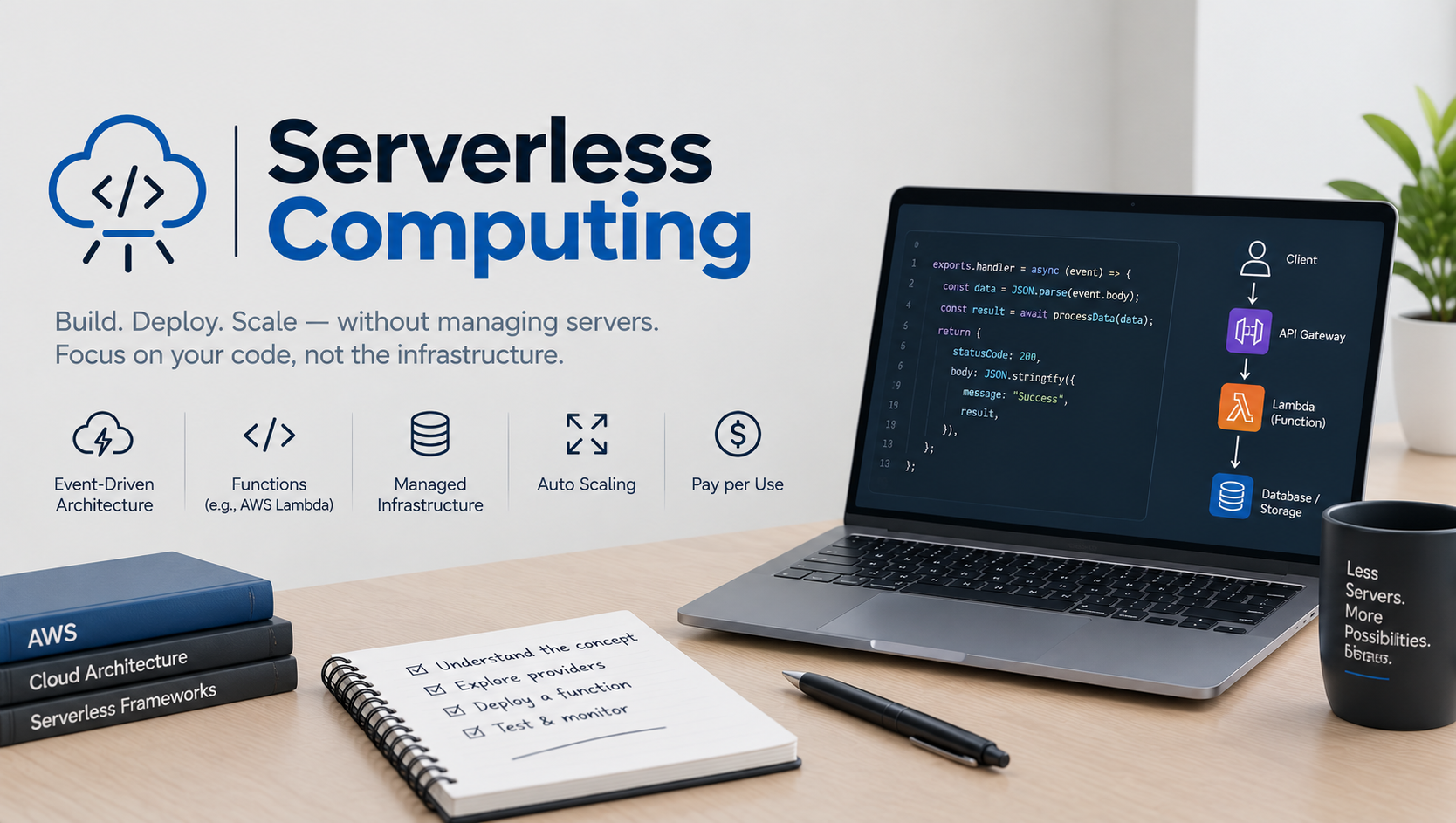
  • Learn AWS Lambda, API Gateway, and DynamoDB to build event-driven, auto-scaling applications without managing servers. Live projects at techcadd, Ludhiana.

    Learn AWS Lambda, API Gateway, and DynamoDB to build event-driven, auto-scaling applications without managing servers. Live projects at techcadd, Ludhiana.

    What Serverless Computing Actually Is Serverless computing is a way of running code without managing a server. You write a function, upload it, and the cloud provider runs it only when triggered — by an HTTP request, a file upload, or a database change. You pay only for the time the function runs. A serverless developer's job is to design these event-driven workflows. Why This Matters in Ludhiana Right Now Ludhiana's startups and IT services firms are building mobile and web backends that need to scale up and down without a full-time ops team. Serverless on AWS — using Lambda, API Gateway, and DynamoDB — lets them do that at low cost. Companies in the region are hiring developers who can design an event-driven workflow and deploy it, not just write a single function. How techcadd's Approach Is Different Most courses teach you to deploy one Lambda function. This one is built around a real serverless application. From the first module, you are writing functions and deploying them on your own AWS account. You will connect Lambda to API Gateway, store data in DynamoDB, trigger functions from S3, and monitor with CloudWatch. Every deliverable is reviewed by a mentor who still builds serverless systems for clients. The goal is a deployed serverless app you can show an employer, not a certificate alone. The Learning Arc The course offers three tracks: a 3-month Foundation, a 6-month Professional, and a 9-month Expert. It starts with AWS fundamentals and Lambda basics. You then move to applied work — API Gateway, DynamoDB, S3 triggers, and Step Functions. The final stage is a capstone serverless project with monitoring, security, and cost optimisation. What You Finish With By the end, you have a deployed serverless application on your own AWS account, a GitHub repository with your function code, a documented internship certificate from techcadd, and interview readiness backed by placement support.

    • 7 modules
    • 3,6 or 9 months
    Show more
  • Learn OSINT, Google Dorking, DNS enumeration, and reconnaissance to map a target's digital footprint safely. Live labs and placement support at techcadd, Ludhiana.

    Learn OSINT, Google Dorking, DNS enumeration, and reconnaissance to map a target's digital footprint safely. Live labs and placement support at techcadd, Ludhiana.

    What OSINT & Information Gathering Actually Is OSINT (Open-Source Intelligence) is the practice of collecting information about a target from publicly available sources — websites, social media, DNS records, and search engines. Information gathering is the first phase of any security assessment: before you test a system, you map what is visible from the outside. Why This Matters in Ludhiana Right Now Ludhiana's IT services firms and manufacturing exporters are increasingly targeted by phishing and social engineering. Before an attacker sends a single email, they gather employee names, email patterns, and exposed systems. Security teams in the region are hiring analysts who can do the same reconnaissance to find and fix exposure before an attacker does. How techcadd's Approach Is Different Most courses teach you to run a few Google searches. This one is built around a live target scenario. From the first module, you are performing passive and active reconnaissance in a controlled lab, using tools like whois , theHarvester , nmap , and Maltego. You will build a target profile and write a reconnaissance report. Every deliverable is reviewed by a mentor who still works on penetration testing engagements. The Learning Arc This course runs for 2 months across 7 modules. It starts with intelligence fundamentals — the OSINT lifecycle, legal boundaries, and search techniques. You then move to domain and network reconnaissance — DNS, subdomains, and Shodan — and finish with people intelligence, vulnerability scanning, and a full reconnaissance report. What You Finish With By the end, you have a documented reconnaissance report, a target profile built in Maltego, a vulnerability scan output, and interview readiness backed by techcadd's placement support.

    • 7 modules
    • 3,6 or 9 months
    Show more
  • Learn to build, secure, and deploy REST APIs with Node.js, Express, and databases. Live projects and placement support at techcadd, Ludhiana.

    Learn to build, secure, and deploy REST APIs with Node.js, Express, and databases. Live projects and placement support at techcadd, Ludhiana.

    What API Development Actually Is An API (Application Programming Interface) is the layer that lets a mobile app, website, or internal tool talk to a database. An API developer’s job is to build that layer — receive a request, validate it, read or write data, and send back a response — securely and at scale. Why This Matters in Ludhiana Right Now Ludhiana’s startups and IT services firms are building mobile apps and web dashboards for retail, logistics, and manufacturing clients. Every one of those apps needs a backend API. Local companies are hiring developers who can build a Node.js API, connect it to a database, and deploy it — not just write a few routes. How techcadd’s Approach Is Different Most courses teach you to build a to-do API. This one is built around a real backend project. From the first module, you are writing Node.js code and testing endpoints. You will build REST routes, connect to MongoDB and SQL, implement JWT authentication, and deploy to the cloud. Every deliverable is reviewed by a mentor who still builds client APIs. The goal is a deployed API you can show an employer, not a certificate alone. The Learning Arc The course offers three tracks: a 3-month Practitioner, a 6-month Professional, and a 9-month Expert. It starts with Node.js and Express fundamentals — routing, middleware, and request handling. You then move to applied work — databases, authentication, and API security. The final stage is deployment, performance, and a capstone API project. What You Finish With By the end, you have a deployed REST API on a live server, a GitHub repository with your code, a documented internship certificate from techcadd, and interview readiness backed by placement support.

    • 22 modules
    • 3,6 or 9 months
    Show more
  • Learn React Native to build cross-platform Android and iOS apps with live projects, mentor review, and placement support at techcadd, Ludhiana.

    Learn React Native to build cross-platform Android and iOS apps with live projects, mentor review, and placement support at techcadd, Ludhiana.

    What React Native Actually Is React Native is a framework that lets you build a mobile app for both Android and iOS using JavaScript and React. Instead of writing two separate codebases, you write one, and React Native renders native components on each platform. A React Native developer's job is to build the interface, connect it to data, and ship it to the app stores. Why This Matters in Ludhiana Right Now Ludhiana's retail, logistics, and service businesses are moving to mobile — for customer ordering, delivery tracking, and field staff reporting. Local startups and agencies are building these apps with React Native because it is faster and cheaper than maintaining two native teams. This creates demand for developers who can build a complete app, connect it to an API, and publish it. How techcadd's Approach Is Different Most courses teach you to build a to-do list. This one is built around a real app project. From the first module, you are writing React Native code and running it on a device. You will build screens, manage state, connect to APIs, integrate Firebase, and publish to the Play Store. Every deliverable is reviewed by a mentor who still ships client apps. The goal is a published app you can show an employer, not a certificate alone. The Learning Arc The course offers three tracks: a 3-month Practitioner, a 6-month Professional, and a 9-month Expert. It starts with React Native fundamentals — components, styling, and navigation. You then move to applied work — state management with Redux, API integration, and Firebase for authentication and database. The final stage is publishing your app and preparing for interviews. What You Finish With By the end, you have a published app on the Play Store, a GitHub repository with your code, a documented internship certificate from techcadd, and interview readiness backed by placement support.

    • 23 modules
    • 3,6 or 9 months
    Show more
  • Learn static and dynamic malware analysis, sandboxing, and IOC extraction on real samples with mentor review and placement support at techcadd, Ludhiana.

    Learn static and dynamic malware analysis, sandboxing, and IOC extraction on real samples with mentor review and placement support at techcadd, Ludhiana.

    What Malware Analysis Actually Is Malware analysis is the practice of safely examining a suspicious file to understand what it does, how it spreads, and what traces it leaves behind. An analyst’s job is to take an unknown executable or document, run it in a controlled environment, and produce a report that helps a security team respond. Why This Matters in Ludhiana Right Now Ludhiana’s manufacturing and IT services firms are frequent targets of phishing and ransomware. When a suspicious attachment arrives, someone needs to know whether it is safe to open or a live threat. SOC teams in the region are hiring analysts who can triage a file quickly and write a clear IOC report — not just run an antivirus scan. How techcadd’s Approach Is Different Most courses teach theory. This course is built around a live isolated lab. From the first module, you are working with real (but safely contained) malware samples. You will set up a sandbox, run static tools like strings and PEiD, observe dynamic behaviour with Procmon and Wireshark, and write an IOC report. Every deliverable is reviewed by a mentor who still works on incident response. The Learning Arc This course runs for 1.5 months across 3 modules. It starts with malware types and static analysis fundamentals. You then move to dynamic analysis in an isolated sandbox, observing process, file, and network behaviour. The final module covers threat intelligence, IOC extraction, and writing a report a SOC team can act on. What You Finish With By the end, you have a documented malware analysis report, a set of extracted IOCs, a sandbox configuration you built yourself, and interview readiness for SOC and incident response roles, backed by techcadd’s placement support.

    • 3 modules
    • 2 Months
    Show more
  • Master Google Analytics 4 and Search Console to track, audit, and grow websites. Live projects and placement support at techcadd, Ludhiana.

    Master Google Analytics 4 and Search Console to track, audit, and grow websites. Live projects and placement support at techcadd, Ludhiana.

    What Google Analytics & Search Console Actually Is Google Analytics 4 (GA4) is the tool that tracks what users do on a website — pages viewed, buttons clicked, purchases made. Google Search Console is the tool that shows how a website performs in Google Search — which queries bring traffic, which pages are indexed, and what technical issues exist. Together, they tell you if a website is working. Why This Matters in Ludhiana Right Now Ludhiana’s businesses — from manufacturing exporters to local service providers — are investing in websites and digital campaigns. But most of them do not know which pages bring leads or why their traffic dropped. This creates a demand for people who can set up GA4, connect Search Console, and explain in plain language what the data means. Agencies and in-house teams in Ludhiana, Jalandhar, and Amritsar are hiring for this. How techcadd’s Approach Is Different Most courses teach you to pass a Google certification exam. This one is built around live websites. From the first module, you are working inside a real GA4 property and a real Search Console account. You will configure events, build conversion reports, and audit indexing issues on an actual domain. Every deliverable is reviewed by a mentor who still works on client campaigns. The goal is a dashboard you can show an employer, not a certificate alone. The Learning Arc The course runs for 3 months. It starts with analytics fundamentals — how GA4 differs from Universal Analytics, how data is collected, and how to set up a property. You then move to Search Console — verifying a site, reading queries, and fixing coverage errors. The final stage is applied work: building a full measurement dashboard that combines GA4 and Search Console data. What You Finish With By the end, you have a live GA4 property with custom events, a Search Console account with a technical audit, and a combined dashboard that tracks traffic and search performance. You also have a documented internship certificate from techcadd and interview readiness backed by placement support.

    • 6 modules
    • 3,6 or 9 months
    Show more
  • Master AWS, DevOps, and AI-powered cloud solutions on live projects with mentor review and placement support at techcadd, Ludhiana. 3, 6, and 9-month tracks.

    Master AWS, DevOps, and AI-powered cloud solutions on live projects with mentor review and placement support at techcadd, Ludhiana. 3, 6, and 9-month tracks.

    What Cloud Computing Actually Is Cloud computing is the practice of delivering servers, storage, databases, and software over the internet. A cloud engineer’s job is to set up that infrastructure so it is secure, scalable, and cost-effective. Why This Matters in Ludhiana Right Now Ludhiana’s industrial and IT services sectors are moving their workloads to the cloud. Local IT firms are migrating client infrastructure to AWS, and manufacturing units are using cloud tools for inventory and logistics. This creates a demand for people who can configure a virtual machine, set up a load balancer, and automate a deployment pipeline — not just define what those terms mean. How techcadd’s Approach Is Different Most courses teach you to pass an exam. This one is built around a live AWS account. From the first module, you are working in the console and the command line. You will provision an EC2 instance, set up a VPC, and write a Terraform script. Every deliverable is reviewed by a mentor who still works on client projects. The goal is a portfolio of work you can show an employer, not a certificate alone. The Learning Arc The course offers three tracks: a 3-month Foundation, a 6-month Professional, and a 9-month Expert. It starts with Linux, networking, and AWS fundamentals. You then move to applied work — deploying applications, setting up CI/CD with Jenkins, and writing infrastructure as code with Terraform. The final stage is a capstone project where you design and deploy a multi-tier application on AWS. What You Finish With By the end, you have a deployed capstone project on your own AWS account, a documented internship certificate from techcadd, and a set of deliverables — a VPC configuration, a deployed VM, a CI/CD pipeline, and a monitoring dashboard — that you can walk an interviewer through.

    • 18 modules
    • 3,6 or 9 months
    Show more
  • Master prompt engineering and LLM application building — structured output, tool calling, RAG and agents, with live projects in Ludhiana.

    Master prompt engineering and LLM application building — structured output, tool calling, RAG and agents, with live projects in Ludhiana.

    What prompt engineering actually is Prompt engineering is not a list of magic phrases. It is the work of designing the input a language model receives — the instructions, the examples, the retrieved context, the output contract — so that the response is reliable enough to put inside a product. When a prompt has to work a thousand times a day, on messy real inputs, "try rephrasing it" stops being an answer. Structure does. This programme teaches prompting as an engineering discipline, from first principles to production. Why this matters if you're learning in Ludhiana Punjab's hiring market for AI is integration-heavy, not research-heavy. IT services firms in Ludhiana and Mohali, SaaS product teams, and automation departments inside manufacturing and logistics businesses are all wiring LLMs into systems they already run. The first thing that breaks is the prompt: the model returns free text where the system needed JSON, ignores the retrieved document, or leaks an instruction. Companies need people who can design prompts and context that survive contact with real data. That is what this programme builds toward. How the programme is structured The syllabus is a ladder, not a menu. You complete Module 1 before Module 2. Months 1–7 (Practitioner stage) — programming foundations, LLM foundations and prompting, structured output, tool calling and MCP, retrieval-augmented generation, memory and context management, agent frameworks, and a first capstone. Months 8–20 (Engineer stage) — advanced prompt and context engineering, prompt architecture and versioning, production MCP servers, hybrid search and GraphRAG, long-lived agent memory, durable orchestration, multi-agent protocols, browser automation, evaluation and observability, security and red teaming, deployment and cost engineering, ending in a production capstone. Months 21–33 (Architect stage) — data and knowledge pipelines, vector infrastructure, GraphRAG at scale, A2A interoperability, computer-use agents, evaluation science, threat modelling, fine-tuning and distillation, reinforcement learning, voice and vision agents, AgentOps and FinOps, and governance. How techcadd's approach differs Every module ends in something you built. Not a quiz, not a slide demonstration — a working deliverable reviewed by a mentor. The 6-month plan produces two capstones; the 9-month plan produces three plus real-world deployments, a resume and portfolio review, mock interviews and placement assistance. You finish with prompts, pipelines and deployed systems you can walk an interviewer through, not a certificate alone. You work in small batches, on live projects, using the tools the industry uses today: LangChain, LangGraph, FastAPI, Qdrant, Pinecone, Milvus, vLLM, Ray and OpenTelemetry.

    • 6 modules
    • 3,6 or 9 months
    Show more
  • Build real apps on Firebase — Auth, Firestore, Cloud Functions, Storage and Analytics, with live Flutter projects in Ludhiana.

    Build real apps on Firebase — Auth, Firestore, Cloud Functions, Storage and Analytics, with live Flutter projects in Ludhiana.

    What Firebase actually is in an app build Firebase is not a database you bolt on at the end. It is the backend layer a shipped app runs on: who the user is, where their data lives, who is allowed to read it, how files are stored, what happens when they go offline, and how you find out when something breaks. Build it badly and the app leaks data or dies at scale. Build it properly and you can ship a full product without renting a single server. This programme teaches Firebase as that backend layer — from project setup to production rules, functions and analytics — and every module produces a working feature in a real app. Why this matters if you're learning in Ludhiana Punjab's app market is small-team and client-driven. Ludhiana's app and web studios, Mohali's product startups and freelancers across Jalandhar, Amritsar and Patiala all reach for Firebase because it removes the need for a backend hire on small builds. The recurring briefs — booking apps, delivery trackers, gamified learning apps, client portals — all need authentication, cloud data, offline support, file uploads and push notifications. Studios need developers who can set that up securely rather than leaving the database wide open. That is exactly what this programme builds toward. How the programme is structured The syllabus is a ladder, not a menu. You complete Module 1 before Module 2. Months 1–3 (Firebase Practitioner) — project setup, Firebase Auth, Cloud Firestore data modelling, realtime and offline behaviour, security rules basics, and a first production capstone. Months 4–6 (Firebase Professional) — Cloud Storage, Cloud Functions, Cloud Messaging, Remote Config, Analytics and Crashlytics, App Check, performance monitoring and deployment to production. Months 7–9 (Firebase Engineer) — advanced security rules, multi-environment setup with the Firebase CLI and emulators, CI/CD with GitHub Actions, cost and scaling control, Extensions, third-party integrations including AI features, and a client-ready capstone with documentation. How techcadd's approach differs Every module ends in a working feature. Not a console walkthrough, not a slide demonstration — a live backend connected to a real app, reviewed by a mentor. The 3-month plan produces a working app on Firebase; the 6-month plan extends it into a production-grade backend with functions, notifications and analytics; the 9-month plan finishes with a secured, multi-environment, cost-aware backend delivered with documentation. You work in small batches, on live projects, using the tools the industry uses today: Firebase Auth, Cloud Firestore, Cloud Functions, Cloud Storage, Firebase CLI and the Emulator Suite.

    • 6 modules
    • 3,6 or 9 months
    Show more
  • Build and ship cross-platform game apps with Flutter, Dart and Flame — UI, state, APIs and publishing, with live projects in Ludhiana.

    Build and ship cross-platform game apps with Flutter, Dart and Flame — UI, state, APIs and publishing, with live projects in Ludhiana.

    What game app development actually is here This is not a course about game engines you'll never ship with. It's the work of building a playable, publishable app: a game loop that runs at frame rate, sprites and physics that behave, state that doesn't break when the screen rotates, and a build that lands on both Android and iOS from one codebase. That combination — Flutter for the app, Flame for the game layer — is what small studios and solo developers actually use. This programme teaches it from zero code to a store-ready build. Why this matters if you're learning in Ludhiana Punjab's app market is small-team and client-driven, not AAA. Ludhiana's app and web studios, Mohali's SaaS and product startups, and freelance developers across Jalandhar, Amritsar and Patiala all take on cross-platform builds because one codebase serving Android, iOS and web is the only way the economics work. Casual games, gamified learning apps, hyper-casual ad-funded titles and interactive product demos are the recurring briefs. They need people who can write Dart, manage state properly, wire an API and get the app through Play Store review. That is what this programme builds toward. How the programme is structured The syllabus is a ladder, not a menu. You complete Module 1 before Module 2. Months 1–3 (Flutter Practitioner) — Dart foundations, Flutter UI, state management, asynchronous programming, working with data, Firebase integration, testing and debugging, advanced UI techniques, and a first production capstone. Months 4–6 (Flutter Professional) — platform integration, deep state management, advanced Dart features, architecture and design patterns, performance optimisation, AI integration, on-device ML with ML Kit, publishing and deployment, Flutter plugins and packages. Months 7–9 (AI Flutter Engineer) — Git and GitHub for teams, generative AI and LLM integration, agentic and multimodal features, backend as a service, cloud and app store release, app monetisation and analytics, and a client-ready capstone with documentation and delivery. How techcadd's approach differs Every module ends in something you built. Not a quiz, not a slide demonstration — a working deliverable reviewed by a mentor. The 3-month plan produces one production capstone; the 6-month plan builds on it with a professional-grade build and real deployment; the 9-month plan finishes with a client-ready app, full documentation and delivery. You finish with a GitHub history and an app you can hand someone a phone to play, not a certificate alone. You work in small batches, on live projects, using the tools the industry uses today: Dart, Flutter, Flame, Firebase, Riverpod, Bloc, Dio, Git and GitHub Actions.

    • 6 modules
    • 3,6 or 9 months
    Show more
  • Build and deploy real LLM applications — RAG, agents, and fine-tuning — with live projects, mentor review, and placement support at Techcadd, Ludhiana.

    Build and deploy real LLM applications — RAG, agents, and fine-tuning — with live projects, mentor review, and placement support at Techcadd, Ludhiana.

    What this bootcamp actually is Most "AI courses" teach you to talk to a chatbot. This one teaches you to build with the model. An LLM application is a loop: the model reasons, picks a tool, acts, reads the result, and repeats until the job is done — wired into a real database, a real API, a real interface. That loop is what companies are paying to build right now. The bootcamp teaches that loop from the ground up. It assumes no coding background and ends with you deploying a working LLM application. Why this matters if you're learning in Ludhiana Punjab's hiring market for AI is not research-heavy — it's integration-heavy. IT services firms in Ludhiana and Mohali, SaaS product teams, and automation departments inside manufacturing and logistics businesses are all trying to wire LLMs into tools they already run. They need people who can build a retrieval pipeline over a company's documents, connect an agent to a CRM through an MCP server, and put it into production without it leaking data or hallucinating prices. That is exactly what the three stages of this bootcamp build toward. How the bootcamp is structured The programme is a ladder, not a menu. You complete Month 1 before Month 2 — each module assumes the one before it. Months 1–7 (Practitioner stage) — programming foundations, LLM prompting, tool calling and MCP, retrieval-augmented generation, memory and state, agent frameworks, and a first capstone. Months 8–20 (Engineer stage) — Python at scale, model serving, production MCP servers, hybrid search and GraphRAG, long-lived agent memory, durable orchestration, multi-agent protocols, browser automation, evaluation, security, deployment and cost engineering, ending in a production agent capstone. Months 21–33 (Architect stage) — data and knowledge pipelines, vector infrastructure, GraphRAG at scale, multi-agent A2A systems, computer-use agents, evaluation science, red teaming and threat modelling, fine-tuning and distillation, reinforcement learning, voice and vision agents, AgentOps and FinOps, and governance. How techcadd's approach differs Every module ends in something you built. Not a quiz, not a slide demonstration — a working deliverable reviewed by a mentor. The 6-month plan produces two capstones; the 9-month plan produces three plus real-world deployments, a resume and portfolio review, mock interviews and placement assistance. You finish with a GitHub history and a demo you can walk an interviewer through, not a certificate alone. You work in small batches, on live projects, using the same tools the industry uses today: LangChain, LangGraph, Pinecone, Milvus, Weaviate, vLLM, Ray and OpenTelemetry. By the last module you can build, evaluate, secure and deploy an LLM application without being walked through it.

    • AI & Data
    • 3,6 or 9 months
    Show more
  • Learn MongoDB, Express, React & Node.js across 3, 6, or 9-month plans. Build live MERN projects with mentor review and placement support in Ludhiana.

    Learn MongoDB, Express, React & Node.js across 3, 6, or 9-month plans. Build live MERN projects with mentor review and placement support in Ludhiana.

    What the MERN Stack Actually Is The MERN stack is four technologies that work as one pipeline: MongoDB stores the data, Express.js routes the requests, React renders the interface, and Node.js runs the server. A MERN developer is the person who can move between all four — read a failing API call, trace it back to a schema problem, and fix it without waiting for three other specialists. That is the skill employers pay for. Why This Matters in Ludhiana Right Now Ludhiana’s IT sector is growing beyond its manufacturing roots. Product teams along Ferozepur Road and in Model Town are building SaaS dashboards, e-commerce back ends, and internal tools — and most of them run on JavaScript end to end. They need developers who can ship a working feature, not just explain what a component is. The MERN stack is the fastest route into that demand: one language (JavaScript) across the whole application, and a portfolio you can deploy on day one. How Techcadd’s Approach Is Different Most MERN courses are a tour of four tools. This one is a ladder. In the 3-month Practitioner plan, you cover Modules 1–10: JavaScript foundations, HTML/CSS, React components and hooks, Node and Express, MongoDB and Mongoose, authenticated REST APIs, and a full MERN CRUD capstone. The 6-month Professional plan repeats all ten, then adds Modules 11–22: Redux Toolkit, advanced auth, MongoDB aggregation, Socket.io real-time apps, payments, Next.js, testing, and CI/CD — ending in a production-grade application. The 9-month Expert plan repeats all 22, then adds Modules 23–34: AI-assisted development, LLM API integration, microservices, multi-tenant SaaS, security hardening, system design, and a career-launch capstone. What makes it stick is the format. Every module ends with a deliverable. You work on live applications and real code reviews with mentors who still build client projects. Small batches at the Ludhiana campus mean your architecture gets questioned, not just your attendance. By the end of any plan, you are not holding a certificate of attendance — you are holding a deployed application, a Git history, and interview-ready proof of work. 14. Overview This MERN Stack Development Course in Ludhiana is a 3, 6, or 9-month programme that takes you from JavaScript fundamentals to production-grade full-stack applications. The learning arc moves from foundations (JavaScript, HTML/CSS, React, Node, MongoDB) to applied work (Redux, advanced auth, Socket.io , payments, Next.js) and finally to a capstone (AI-powered features, microservices, or a career-launch portfolio). You finish with a portfolio of deployed MERN projects, a documented certificate of completion, and interview-ready proof of your work — not just a completion letter.

    • 6 modules
    • 3,6 or 9 months
    Show more
  • Build and deploy production-ready Django web apps in a mentor-led bootcamp with live projects, code reviews and placement support at Techcadd, Ludhiana.

    Build and deploy production-ready Django web apps in a mentor-led bootcamp with live projects, code reviews and placement support at Techcadd, Ludhiana.

    What Django actually is Django is the Python web framework that ships with the parts most teams end up rebuilding: an ORM, an admin panel, authentication, routing and a security layer. It is the reason a small team can run a booking system, a CRM or a multi-user SaaS product without hand-rolling every piece. Learning it is less about memorising syntax and more about understanding how a request travels through models, views, templates and URLs — and where to put your logic so the app stays maintainable six months later. Why this matters in Ludhiana right now Ludhiana's software work is no longer only ERP support and desktop tools. Local product teams, Mohali-based SaaS companies and in-house engineering departments across Punjab are building web platforms on Python. The gap they report is not "people who have watched a Django tutorial" — it is people who have actually deployed an app, handled migrations without breaking a database, and debugged a query that slowed down under real data. That gap is what this bootcamp is built to close. How Techcadd's approach differs Most courses show you a to-do app in a lab environment and stop. Here, each module ends with a deliverable you push to your own repository: a working model layer, a tested API endpoint, a deployed page. You get mentor review on the code itself — naming, structure, query efficiency — the same way a senior developer would review a junior's pull request. Foundations first, then applied work You start with Python-for-web fundamentals and HTTP, then move into Django's MVT pattern. By the time you touch authentication or APIs, you already understand what the framework is doing on your behalf. Real deployment, not localhost-only A Django project that only runs on your laptop is not a portfolio piece. The bootcamp includes deployment, environment configuration and static/media handling so your capstone is reachable by a real URL you can send to an interviewer. A capstone that survives interview questions You finish with one deployed, multi-feature Django application built end to end. Because you built every layer yourself, you can answer "why did you structure it that way" — which is what technical interviewers actually ask. Please treat the module names, durations and deliverables below as a scaffold. Replace them with your real syllabus content once available.

    • 6 modules
    • 3,6 or 9 months
    Show more
  • Learn Deep Learning Essentials in Ludhiana with offline classroom training, hands-on neural network projects, and placement support. Master ANN, CNN, RNN, TensorFlow, and Keras.

    Learn Deep Learning Essentials in Ludhiana with offline classroom training, hands-on neural network projects, and placement support. Master ANN, CNN, RNN, TensorFlow, and Keras.

    What Deep Learning Essentials Actually Is Deep Learning Essentials is the stage where machine learning stops being about clean tables of numbers and starts being about images, sequences, and unstructured data. It is the part of AI that powers image classifiers, speech recognition, and language models. This programme covers the core architectures — Artificial Neural Networks (ANN), Convolutional Neural Networks (CNN), and Recurrent Neural Networks (RNN) — and gives you hands-on practice building and training them using TensorFlow and Keras. Why It Matters in Ludhiana Right Now Ludhiana’s AI and analytics adoption is moving from basic machine learning into deep learning applications: quality inspection from images in manufacturing, document processing in logistics, and NLP-based customer support in IT services. Employers are not just asking for ML experience anymore — they want people who can train a neural network, evaluate it, and explain why it works. A Deep Learning Essentials Course in Ludhiana that focuses on real model-building, not just theory, is directly aligned with what local employers are hiring for. How Techcadd’s Approach Is Different Most deep learning tutorials give you a dataset and a completed notebook. At Techcadd, the structure is built around what you produce. Each module follows the same pattern: topics, then tools, then a real-world use case, then a deliverable. You do not just read about CNNs — you build an image classifier. You do not just learn about RNNs — you train a model on sequence data. The programme is delivered offline at the Ludhiana campus, which means you learn in person, ask questions directly, and get immediate answers rather than watching pre-recorded videos. Batches are kept small so mentors can review your actual code, your model architecture, and your evaluation metrics — not just mark attendance. The syllabus includes a certificate of completion, and the career support team works with you on resume building, LinkedIn presence, and mock interviews. What You Finish With By the end of the programme, you have a portfolio of deep learning work: a trained ANN model, an image classifier built with CNN, a sequence model built with RNN, and a complete deep learning project using either computer vision or NLP. You also finish with a certificate, interview preparation, and a clear understanding of the roles you are ready to apply for.

    • 5 modules
    • 3,6 or 9 months
    Show more
  • Learn Data Science in Ludhiana with live classes, hands-on projects, and placement support. Master Python, ML, and AI to build a career-ready portfolio.

    Learn Data Science in Ludhiana with live classes, hands-on projects, and placement support. Master Python, ML, and AI to build a career-ready portfolio.

    What Data Science Actually Is Data Science is the work of turning raw, messy data into decisions a business can act on. It is not just coding, and it is not just statistics — it is the full loop of collecting data, cleaning it, exploring it, building models, and explaining what the numbers mean to someone who has to make a call. Most people entering the field in Ludhiana come from a BCA, B.Sc , or B.Tech background and need a practical bridge from their degree to what employers actually ask for. Why It Matters in Ludhiana Right Now Ludhiana’s economy runs on manufacturing, logistics, and a growing IT services sector. These businesses are generating more data than ever — production logs, sales records, customer enquiries — but they lack people who can turn that data into forecasts, dashboards, or automated reports. A Data Science Course in Ludhiana that focuses on real-world applications, not just theory, is directly aligned with what local employers are hiring for. The demand is not just in metro cities; it is in the industrial belt. How Techcadd’s Approach Is Different Most courses show you a dataset and a completed notebook. At Techcadd, the structure is built around what you produce. Every module in this programme follows the same pattern: topics, then tools, then a real-world use case, then a deliverable. You do not just learn NumPy — you use it to clean a dataset. You do not just read about regression — you build a model and evaluate it. The programme is offered across three durations so you can match the depth to your available time. The Data Science Practitioner (16 modules) is the foundation. The Professional (20 modules) adds deep learning and computer vision. The Expert (25 modules) extends into advanced ML, AI pipelines, and a capstone project. Each longer plan repeats the full module list of the shorter one before adding its own, so nothing is skipped. Classes are delivered offline at the Ludhiana campus, which means you learn in person, ask questions directly, and get immediate answers rather than watching pre-recorded videos. Batches are kept small so mentors can review your actual work — your code, your analysis, your model — not just mark attendance. The syllabus includes a dedicated certificate of completion, and the career support team works with you on resume building, LinkedIn presence, and mock interviews.\ What You Finish With By the end of the programme, you have a portfolio of hands-on projects: data cleaning pipelines, exploratory analysis reports, visualisations, and at least one end-to-end data science project with machine learning. For Expert plan students, that includes a capstone project. You also finish with a certificate, interview preparation, and a clear understanding of the roles you are ready to apply for.

    • 6 modules
    • 3, 6 or 9 Months
    Show more
  • Build cross-platform apps with Flutter and Dart — live projects, mentor-reviewed code, device testing, and placement support. Small batches in Ludhiana.

    Build cross-platform apps with Flutter and Dart — live projects, mentor-reviewed code, device testing, and placement support. Small batches in Ludhiana.

    What Cross-Platform App Development Actually Is Cross-platform app development means writing one codebase that runs on Android, iOS, and often web — instead of building and maintaining three separate native apps. Flutter, Google's framework, is the tool most teams in Punjab have standardised on because it produces near-native performance, ships to both stores from one project, and has a widget system that lets a small team deliver a production app in weeks rather than months. What employers actually want is not someone who has watched a Flutter tutorial, but someone who can take a brief, structure the app, build the screens, wire the backend, handle device-specific behaviour, and get the build into the Play Store and App Store without hand-holding. Why This Matters in Ludhiana Right Now Ludhiana's software market has shifted. Local manufacturers, logistics companies, D2C brands, and service businesses are no longer buying websites only — they want apps their customers actually open daily. That demand has created a steady stream of Flutter work across Ludhiana and the surrounding belt — Jalandhar, Phagwara, Hoshiarpur, Mohali — where agencies and product teams build for Indian and overseas clients. The hiring pattern is consistent: teams want developers who have shipped at least one real app, understand state management beyond setState, and can debug on a physical device. A portfolio with one live app beats a certificate with ten completed exercises. How Techcadd Teaches It Differently Techcadd's Cross-Platform App Bootcamp is built around live builds, not slide decks. From Module 1 you are writing Dart and running Flutter apps on an emulator and a real device. Every module follows the same rhythm: learn the concept → build a guided feature → apply it in a live app build → get it reviewed by a mentor → ship it into the next module's project. By the end of the bootcamp you have not one demo app but a progression of apps, each one more complete than the last, ending in a production-grade capstone that runs on live Firebase services and is published to the Play Store. The programme runs across three plans — 3-month Flutter Practitioner, 6-month Flutter Professional, and 9-month AI Flutter Engineer — structured as a nested ladder. The 3-month plan takes you from Dart basics to a published first app. The 6-month plan adds platform integration, architecture patterns, AI features, and store deployment. The 9-month plan extends into CI/CD, monetization, generative AI APIs, and a client-brief capstone. What You Finish With You finish with a store-published Flutter app, a GitHub repository you can walk an interviewer through, a working Firebase backend, and a capstone project built from a client-style brief. You also have the interview answers that matter — how you chose your state management approach, how you debugged a device-specific bug, and how you shipped your first release.

    • 7 modules
    • 3,6 or 9 Months
    Show more
  • Learn app testing and QA with live projects, real test cycles, and placement support. Small batches, mentor-reviewed bug reports, and interview prep included.

    Learn app testing and QA with live projects, real test cycles, and placement support. Small batches, mentor-reviewed bug reports, and interview prep included.

    What App Testing and QA Actually Is App testing and QA is not about clicking buttons until something breaks. It is the discipline of systematically verifying that a software product works as intended — and finding the places where it doesn't — before a real user ever touches it. A QA analyst reads requirements, writes test cases that cover both expected and edge-case behaviour, executes those tests on real devices and browsers, logs defects with enough clarity that a developer can reproduce them without asking questions, and then re-tests once fixes are deployed. In small product teams, the QA person is often the last line of defence between a buggy release and an angry user. Why This Matters in Ludhiana Right Now Punjab's app economy is no longer just Chandigarh and Mohali. Ludhiana has a growing base of product startups, e-commerce builds, and digital agencies that ship mobile apps for local manufacturers, logistics companies, and D2C brands. Those teams cannot afford to hire a developer for every testing task, so they hire dedicated QA analysts — people who can own the test cycle end to end. The demand is not for people who know what testing is; it is for people who can join a sprint, pick up a ticket from Jira, write test cases in TestRail, run a regression cycle on BrowserStack, and file a bug report that a developer can act on the same day. How Techcadd Teaches It Differently Techcadd's App Testing and QA programme is built around live test cycles, not slide decks. From Module 1, you work on actual app builds — some from Techcadd's own client projects, some from open-source apps — and you run the same test documentation workflow a working QA team uses: test plan → test cases → execution → defect log → regression → release sign-off. Every bug report you write is reviewed by a mentor who still runs QA on client work, and you re-submit until it meets the standard a real development team would accept. The programme runs across three plans — 3-month Flutter Practitioner, 6-month Flutter Professional, and 9-month AI Flutter Engineer — but the QA track is structured as a nested ladder. The 3-month plan covers manual testing foundations, test case design, and defect reporting. The 6-month plan adds API testing, automation with Flutter integration tests and Appium, and performance testing basics. The 9-month plan extends into CI/CD test pipelines, AI-assisted test case generation, and a full capstone where you own the QA cycle for a production-grade app build. What You Finish With By the end of the programme, you have a portfolio of test artefacts: a complete test plan, a test case repository, a defect log with real bugs you found and verified, an automation test suite, and a capstone QA report for a full app release. You also have interview-ready answers for the questions QA hiring managers actually ask — how you prioritise test coverage, how you write a reproducible bug report, and how you decide when a build is ready to ship.

    • 7 modules
    • 3,6, or 9 Months
    Show more
  • Learn Python programming, key libraries (NumPy, Pandas, Matplotlib, Seaborn) and app deployment. 3-month, project-based course in Ludhiana with placement support.

    Learn Python programming, key libraries (NumPy, Pandas, Matplotlib, Seaborn) and app deployment. 3-month, project-based course in Ludhiana with placement support.

    What Python Really Is Python is not a "course" you finish and forget. It's a working language — the one most data, automation, and AI teams in Ludhiana and across Punjab use daily. You learn it by writing code, breaking it, and fixing it. Why It Matters in Ludhiana Now Manufacturing units in Ludhiana are automating inventory and quality checks. Local IT firms on Ferozepur Road and Model Town are building data dashboards for clients. Startups in Mohali and Jalandhar need people who can clean data, run analysis, and ship a simple web app. These roles don't require a CS degree — they require proof you can build something. How Techcadd’s Approach Is Different Most Python courses give you slides and syntax drills. This one gives you a dataset on day one. Every module ends with a deliverable: a script, a notebook, or a working app. Your mentor reviews your code line by line. You work on a live dataset from a real business scenario — not a toy example. What You Actually Build By the end of month one, you have working Python scripts. By month two, you have a data analysis report on a real dataset. By month three, you have deployed a web app that anyone can open in a browser. That app becomes the centrepiece of your portfolio. Where This Leads This is not a "become a data scientist in 3 months" promise. It's a focused, practical program that makes you hireable for junior Python, data analyst, or automation roles — or gives you the foundation to go deeper into AI later. Graduates have moved into roles at local IT firms, e-commerce companies, and manufacturing units.

    • 4 modules
    • 3 Months
    Show more
  • Learn Tally ERP9 with GST through practical accounting, inventory, payroll, banking and reporting tasks, with guided practice and placement support.

    Learn Tally ERP9 with GST through practical accounting, inventory, payroll, banking and reporting tasks, with guided practice and placement support.

    Accounting work is not limited to entering numbers into software. It involves recording transactions correctly, maintaining ledgers, managing inventory, handling GST, reconciling information and producing reports that show the financial position of a business. The Tally ERP9 With GST Course in Ludhiana starts with accounting fundamentals and then moves into practical software-based work. The 2-month syllabus begins with accounting principles, modes, rules, double-entry bookkeeping and manual journal entries before introducing Tally ERP9. From Accounting Basics to Tally ERP9 The first month establishes the accounting foundation before students work with Tally. Learners practise manual journal entries, create companies, configure Tally, and work with accounting masters such as groups, ledgers and voucher types. Inventory training then covers stock groups, stock categories, units of measure, godowns and stock items. The course then moves into transaction-level work. Students practise contra, sales, purchase, payment, receipt and journal vouchers, including cash, bank, credit sales, credit purchases, drawings and adjustment entries. The syllabus also includes journal-entry practice based on TS Grewal examples. GST and Company Data Practice The second month uses company-data exercises to connect accounting concepts with business transactions. Students work through multiple months of company records, including fees, expenses, bank transactions, fixed assets, GST, ledger alterations, GST adjustments, depreciation, provisions and trial-balance matching. GST training includes GST features and types, statutory and taxation details, GST ledger creation, input and output GST, GST adjustments and payment of GST to the government. The syllabus also includes GSTR-1, GSTR-2 and GSTR-3B reporting. Payroll, Import, Banking and Reports The later part of the programme expands beyond basic accounting. Students practise payroll information, employee categories and groups, pay heads, salary details, attendance and payroll vouchers. They also prepare an Excel spreadsheet, enable Excel import in Tally, import the data and verify it. Banking practice includes cheque printing, deposit slips, bank reconciliation and payment advice. Reporting work includes the Balance Sheet, Profit & Loss Account, Stock Summary and Ratio Analysis, followed by Day Book, Trial Balance, Accounts Books, Inventory Books, Cash/Fund Flow, Receipts and Payments, Payroll Reports and Exceptional Reports. The programme closes with revision covering company creation, ledgers, vouchers, inventory, debtors, creditors, sales and purchase ledgers, bills and bill printing

    • 15 modules
    • 2 Months
    Show more
  • A practical, project-based introduction to Data Science for beginners — live datasets, mentor review and placement support.

    A practical, project-based introduction to Data Science for beginners — live datasets, mentor review and placement support.

    Data science is the discipline of extracting insight and prediction from data at scale. It sits one level above analytics — instead of only describing what happened, it builds models that estimate what will happen next. Every organization that has started reporting on its data eventually asks the next question: can we predict it? That question is what creates demand for data scientists. In Punjab, manufacturing, retail, healthcare, and financial services companies are all moving from dashboards to forecasting, and each of them needs people who can train, validate, and explain a model. Techcadd's Data Science programme is built around the tools that appear in actual job descriptions — Python, Scikit-learn, TensorFlow, SQL, and Power BI — not academic substitutes. You work on real datasets from the first month and finish with a portfolio of documented models, not certificates alone. The programme is available in 3, 6, and 9-month tracks, and each longer track includes everything from the shorter one without repeating a module. Batch sizes are capped at 10–12 students, and every deliverable is reviewed weekly by mentors who still work with client data.

    • 10 modules
    • 3 / 6 / 9 Months
    Show more
  • A practical, project-based introduction to Machine Learning for beginners — live datasets, mentor review and placement support.

    A practical, project-based introduction to Machine Learning for beginners — live datasets, mentor review and placement support.

    Machine learning is the discipline of building systems that learn patterns from data instead of following hand-written rules. It sits at the centre of modern data work — every recommendation engine, fraud detector, price forecast, and risk score is a machine learning model underneath. For someone training in Ludhiana, this is a practical, hireable skill rather than a research topic. Punjab's manufacturing, retail, healthcare, and financial services companies are all moving from reporting to prediction, and each of them needs people who can train, validate, and explain a model to a business team. Techcadd's Machine Learning programme is built around the tools that appear in actual job descriptions — Python, Scikit-learn, Pandas, SQL, and TensorFlow — not academic substitutes. You train and compare models on real datasets from the first month and finish with a portfolio of documented models, not certificates alone. The programme is available in 3, 6, and 9-month tracks, and each longer track includes everything from the shorter one without repeating a module. Batch sizes are capped at 10–12 students, and every deliverable is reviewed weekly by mentors who still work with client data.

    • 8 modules
    • 3 / 6 / 9 Months
    Show more
  • Learn to secure networks against unauthorised access, attacks and vulnerabilities through networking fundamentals, firewalls, VPNs, IDS/IPS, traffic analysis and network security monitoring.

    Learn to secure networks against unauthorised access, attacks and vulnerabilities through networking fundamentals, firewalls, VPNs, IDS/IPS, traffic analysis and network security monitoring.

    The Network Security Course in Ludhiana provides practical knowledge of securing computer networks, communications and connected systems. Learners begin with networking fundamentals including TCP/IP, OSI, IP addressing, ports, DNS, routing and switching before progressing into firewalls, VPNs, network scanning, traffic analysis, intrusion detection and prevention, Wi-Fi security and network monitoring. Practical labs using tools such as Wireshark, Nmap, Snort, Kali Linux and firewall technologies help learners understand how networks are assessed, monitored and protected.

    • 11 modules
    • 3 Months
    Show more
  • Build practical skills to protect information, systems and digital assets through security principles, access control, cryptography, risk management and security monitoring.

    Build practical skills to protect information, systems and digital assets through security principles, access control, cryptography, risk management and security monitoring.

    The Information Security Course in Ludhiana introduces learners to the principles and practices used to protect information and digital assets from unauthorized access, modification, disclosure and disruption. The course covers the CIA Triad, information security fundamentals, authentication and access control, data protection, cryptography, network and endpoint security, vulnerability and risk management, security policies, logging and incident response. Practical exercises and security tools help learners connect information security concepts with real-world defensive practices.

    • 10 modules
    • 3 Months
    Show more
  • 3-month Power BI Developer course in Ludhiana with live dashboards, SQL, DAX, Power BI Service deployment and placement support.

    3-month Power BI Developer course in Ludhiana with live dashboards, SQL, DAX, Power BI Service deployment and placement support.

    What a Power BI Developer actually does A Power BI Developer sits between raw business data and the people who make decisions with it. The job is not "make a chart" — it is to pull data out of SQL databases and Excel sheets, model it correctly, write DAX measures that hold up under scrutiny, and ship dashboards that a plant manager or finance head opens every morning. In Punjab's mid-size manufacturing and retail firms, this role often replaces three or four manual Excel reports a week. Why it matters in Ludhiana right now Ludhiana's manufacturing, hosiery, auto-parts, retail and finance sectors run on data that lives in SQL Server, Tally exports and Excel files. Companies here are hiring for one specific skill: someone who can turn that mess into a dashboard the leadership team actually uses. That is why Power BI Developer roles in Ludhiana are posted consistently — and why employers screen for SQL and DAX, not just chart-making. How Techcadd's approach differs Most Power BI courses teach you the toolbar. This one teaches you the job. Every module ends with a deliverable — a data model, a DAX measure set, a published dashboard — reviewed by a mentor who works on live client dashboards. You work on real datasets, not sample files. Batches are kept small so review is per-student. By month three you are not "learning Power BI" — you are shipping dashboards the way a working developer does. What you actually build Month 1: Excel automation sheet, SQL query pack, first Power BI data model Month 2: Advanced DAX measure library, time-intelligence report, full dashboard design Month 3: Deployed workspace with row-level security, Python-assisted forecast and anomaly detection, capstone BI dashboard + portfolio + interview prep The stack you leave with Excel · SQL (DDL, DML, joins, subqueries, views) · Power BI Desktop · Power Query (M) · DAX · Power BI Service · Python (Pandas) for BI · Who this is for Anyone who wants a BI developer job — not a certificate. If you are a graduate, a working professional in reporting or MIS, or someone switching into analytics from a non-tech background, this 3-month track gives you the exact deliverables employers in Ludhiana ask for in interviews.

    • 4 modules
    • 3 Months
    Show more
  • 6-month Deep Learning Course in Ludhiana — live projects, mentor-reviewed deliverables, Python to neural networks, with placement support.

    6-month Deep Learning Course in Ludhiana — live projects, mentor-reviewed deliverables, Python to neural networks, with placement support.

    What deep learning actually is Deep learning is the part of machine learning that uses layered neural networks to find patterns in data that simpler models miss — images, sequences, signals, text. It is not a separate career from AI; it is the layer that sits on top of Python, data handling and classical machine learning. That is why this programme does not start with neural networks. It starts with the programming and data skills every deep learning model depends on, then builds upward. Why it matters in Ludhiana right now Ludhiana's economy is manufacturing, retail, logistics and services — and those sectors are producing more data than they can currently use. Local IT services firms and product teams are being asked for image inspection, demand forecasting, document classification and recommendation features. That demand is not yet saturated the way web development is, which means candidates who can show a trained, evaluated model have a real edge over candidates who only list "AI" as a skill. The nearby Mohali and Chandigarh tech corridor hires for the same roles, and students from Jalandhar, Phagwara, Hoshiarpur and Mukerian travel to Techcadd's Ludhiana campus for exactly this reason. What makes Techcadd's approach different Most courses demonstrate deep learning on a slide and call it done. Here, every module produces a deliverable — a working script, a trained model, an evaluated project — and a mentor reviews it before you move on. Batches are small enough that review is individual. You work on real datasets, not toy samples, and you finish with a portfolio project that combines what you learned across the six months. That is the difference between a certificate and a job conversation. The six-month arc Months 1–2 — Programming and data foundations. Python fundamentals, object-oriented programming, then NumPy, Pandas, data cleaning, exploratory data analysis, statistics, Matplotlib and Seaborn. You finish able to clean and explore a real dataset and report what it says. Month 3 — Machine learning. Supervised and unsupervised learning, regression, decision trees, random forests, SVM, KNN, Naive Bayes, clustering, model evaluation, cross-validation and hyperparameter tuning. You finish with a tuned, validated ML model and a documented project. Month 4 — Deep learning. Neural network fundamentals, artificial neural networks, convolutional neural networks, recurrent neural networks, feed-forward networks, and hands-on work in TensorFlow and Keras. You finish with trained neural networks for image and sequence tasks. Months 5–6 — Applied deep learning, deployment and capstone. Computer vision and sequence-model application work, then deployment: Streamlit, Flask routing and templates, Django models, views and admin panel, APIs and API-key handling, JSON responses, and practical API integration. You close with a major project that combines ML and deep learning skills, plus portfolio and interview preparation. What you finish with A six-month certificate, a portfolio of reviewed deliverables from every module, one deployment-ready deep learning capstone, and interview preparation grounded in the projects you actually built.

    • 5 modules
    • 6 Months
    Show more
  • Applied AI & Machine Learning course in Ludhiana: 9 months of Python, ML, Deep Learning, NLP, CV, and deployment with live projects, mentor review, and placement support.

    Applied AI & Machine Learning course in Ludhiana: 9 months of Python, ML, Deep Learning, NLP, CV, and deployment with live projects, mentor review, and placement support.

    What Applied AI & Machine Learning Actually Is Applied AI and machine learning is the work of taking a raw dataset and turning it into a working, deployed application that someone else can use. It is not one skill — it is a chain: you clean and analyse data, train a machine learning model, evaluate it honestly, then wrap it in a web interface, version it on GitHub, and ship it. The "applied" part means you own the whole chain, not just the model in a notebook. Most AI courses in Punjab stop at the model. Employers do not hire notebooks. They hire people who can take a model and put it in front of a user. Why This Matters in Ludhiana Right Now Ludhiana's economy runs on manufacturing, textiles, bicycle parts, and a fast-growing IT services layer. Those industries are generating more data than they can process — production logs, sales records, customer feedback, inventory images. Companies that learn to build predictive models and computer vision systems in-house gain a real operational edge. That demand is creating sustained local hiring for AI developers, ML engineers, and data scientists who can build and deploy, not just theorise. Techcadd's Applied AI & Machine Learning programme is built for that gap. It runs for 9 months across three progressive stages — Foundation, Professional, and Expert — and every stage ends with a deliverable you can show an employer. How Techcadd's Approach Differs Most training programmes teach tools in isolation. This one teaches the full pipeline, in the order a working AI engineer actually uses it: Python → data → machine learning → deep learning → NLP and computer vision → deployment → capstone. Each module includes hands-on practice on a real dataset or a real deliverable, reviewed by a mentor. You are not watching someone else build a model; you are building one, breaking it, fixing it, and shipping it. The final stage is dedicated to frameworks, APIs, and production deployment — Streamlit, Flask, Django, Git/GitHub — followed by a major end-to-end AI project and interview preparation. By the end, you have a deployed application, a portfolio, and a resume that reflects what you can actually build.

    • 5 modules
    • 9 Months
    Show more
  • Digital Forensics course in Ludhiana covering digital evidence, integrity, disk & memory forensics, timelines, file & browser artefacts, Windows event evidence and forensic reporting.

    Digital Forensics course in Ludhiana covering digital evidence, integrity, disk & memory forensics, timelines, file & browser artefacts, Windows event evidence and forensic reporting.

    The Certificate Course in Digital Forensics in Ludhiana introduces learners to the fundamentals of investigating digital evidence in a controlled and structured environment. The course focuses on evidence integrity, preservation, disk and memory evidence, forensic timelines, file and browser artefacts, Windows event evidence and professional reporting. Learners are introduced to forensic investigation workflows and tools including Autopsy, FTK Imager concepts and Volatility concepts, with practical deliverables such as evidence inventories, timelines and forensic case reports.

    • 10 modules
    • 3 Months
    Show more
  • Advanced Excel Course in Ludhiana with practical assignments, formula practice, PivotTables, reports and tests for workplace spreadsheet skills.

    Advanced Excel Course in Ludhiana with practical assignments, formula practice, PivotTables, reports and tests for workplace spreadsheet skills.

    Advanced Excel is less about knowing where buttons are and more about being able to turn spreadsheet data into working reports, calculations and decisions. This 1-month syllabus progresses from basic Excel calculations to PivotTables, lookups, conditional formulas, data analysis and financial functions. Why Advanced Excel matters in Ludhiana Excel is used for practical business tasks such as marksheets, payroll calculations, sales and tax reports, profit reports and annual purchase reports . This syllabus trains students on those specific workflows rather than stopping at basic formatting. It also introduces tools for handling larger or more structured datasets, including PivotTables, PivotCharts, filters, data validation, consolidation and What-If Analysis. For learners in Ludhiana, these skills connect directly with spreadsheet-heavy work in office administration, sales reporting, payroll, purchasing and other business functions. The course also develops formula-based problem solving through IF, Nested IF, VLOOKUP, HLOOKUP, INDEX, MATCH, AVERAGEIF, CONCATENATE, PMT, IPMT and PPMT . From basic calculations to advanced analysis The learning sequence starts with addition, subtraction, multiplication, division, percentage, average and SUM, then moves into payroll, tax, sales, profit and purchasing reports. Students subsequently work through Excel's Home, Insert, Page Layout, Formula and Data tabs , including PivotTables, PivotCharts, formula tracing, error checking, data validation and Scenario Manager. The later modules focus on formula combinations and data retrieval: VLOOKUP, HLOOKUP, INDEX, MATCH, conditional calculations, date functions and combining information across sheets. Financial formulas including PMT, IPMT and PPMT are also practised before the final revision stage.

    • 23 modules
    • Classroom & online
    Show more
  • Learn Python, data analytics, and machine learning with live projects and mentor-reviewed deliverables. 6-month professional training in Ludhiana with placement support.

    Learn Python, data analytics, and machine learning with live projects and mentor-reviewed deliverables. 6-month professional training in Ludhiana with placement support.

    What Machine Learning Actually Is (And Why It Matters in Ludhiana) Machine learning is not a magic box that predicts the future. It is a set of mathematical and statistical techniques that let a computer find patterns in historical data, then use those patterns to make decisions on new data. If you have ever wondered how a bank flags a suspicious transaction, how a factory knows a machine will fail before it does, or how an e-commerce site recommends a product — that is machine learning at work. For someone learning this in Ludhiana right now, the opportunity is concrete. Punjab’s traditional strengths — manufacturing, agriculture, healthcare, and retail — are all becoming data-rich. A textile unit in Ferozepur Road generates machine sensor data every second. A hospital in Model Town needs to predict patient readmission risks. A fintech company in Sarabha Nagar wants to automate loan eligibility scoring. These are not Silicon Valley problems; they are local problems that need local talent who understand the data and the business context. Why Techcadd’s Approach Is Different Most courses teach machine learning as a passive subject: watch a video, copy a notebook, move on. Techcadd’s 6-month Professional Machine Learning Course is built around a different principle — you learn by shipping. Live datasets, not toy data: From Month 1, you work with real, messy datasets — not the clean data that every online tutorial uses. Mentor-reviewed deliverables: Every module ends with a deliverable (an EDA report, a trained model, a deployment). A mentor who still works on client ML projects reviews your work and gives you feedback before you move forward. Small batches: We cap batch sizes so you get direct access to your mentor, not a chat queue. Portfolio-first: By the end of Month 6, you have a documented, deployment-ready project that you can show in an interview — not just a certificate. The Learning Arc: Foundations → Applied ML → Deployment The program is structured as a ladder, not a menu. In Months 1 and 2, you build the foundation — Python programming, data structures, and object-oriented programming. Month 2 adds data analytics: NumPy, Pandas, data cleaning, and exploratory data analysis (EDA) on real-world datasets. Month 3 moves into machine learning proper — supervised and unsupervised learning, linear and logistic regression, decision trees, random forests, and model evaluation. Month 4 covers deep learning and neural networks, including CNNs for computer vision and RNNs for sequence data. Month 5 works on Deep Learning concepts. Month 6 is the capstone — a full end-to-end ML project, portfolio development, resume preparation, and interview readiness. What You Actually Finish With You do not finish with a vague sense of “knowing ML.” You finish with a portfolio of 5+ documented projects, including a deployment-ready machine learning project with documented results, a deep learning project and a complete exploratory data analysis report on a real dataset. You also finish with a resume and LinkedIn profile reviewed by your mentor, and interview preparation grounded in the actual deliverables you built.

    • 6 modules
    • 6 Months
    Show more
  • AI-powered digital marketing training in Ludhiana with hands-on projects, portfolio building, certification and career & placement support.

    AI-powered digital marketing training in Ludhiana with hands-on projects, portfolio building, certification and career & placement support.

    Learn digital marketing through AI-assisted content, SEO, paid advertising, analytics, ecommerce, social media and automation. The programme includes hands-on projects, portfolio building, industry mentorship, certification and career & placement support.

    • 24 modules
    • Classroom & online
    Show more
  • Learn EDA, statistics and data visualisation with Python, Matplotlib and Seaborn in this practical Data Analytics Course in Ludhiana.

    Learn EDA, statistics and data visualisation with Python, Matplotlib and Seaborn in this practical Data Analytics Course in Ludhiana.

    Learn to Explore Data Before Drawing Conclusions Collecting or cleaning data is only the beginning. The next step is understanding what the dataset is actually showing. Data analytics helps learners examine patterns, compare values, identify unusual observations and communicate findings clearly through statistics and visualisation. This stage focuses on Exploratory Data Analysis (EDA) using Python-based tools and practical datasets. Learners work with structured data and use descriptive statistics, Matplotlib and Seaborn to investigate information before moving into predictive modelling. Start with Exploratory Data Analysis EDA is the process of examining a dataset before making assumptions about it. Students learn how to: Inspect dataset structure Review columns and data types Calculate summary statistics Compare groups Identify distributions Check missing information Look for unusual values Explore relationships between variables The objective is to understand what the data contains and which questions can reasonably be answered from it. Understand Descriptive Statistics Students use statistical measures to summarise data rather than relying only on visual inspection. Topics include: Mean Median Mode Minimum and maximum Range Percentages Frequency Basic probability concepts These measures help learners describe the centre, spread and frequency of information within a dataset. Visualise Data with Matplotlib Matplotlib introduces the fundamentals of Python-based data visualisation. Students create common chart types such as: Line charts Bar charts Histograms Scatter plots Pie charts They also learn how titles, labels and axes make charts easier to interpret. The goal is not simply to produce a chart. Students learn to choose a visual that fits the type of data and question being examined. Explore Patterns with Seaborn Seaborn helps learners create statistical visualisations that make distributions and relationships easier to analyse. Students use visualisations to compare categories, inspect distributions and examine relationships between numerical variables. Produce an EDA Report Students combine statistical summaries and visualisations into a structured exploratory analysis. The practical outcome is an EDA report that explains the dataset, highlights relevant findings and supports observations with suitable statistics and charts. This provides the analytical foundation required before progressing into machine learning.

    • 5 modules
    • Classroom & online
    Show more
  • Networking course in Ludhiana covering TCP/IP, OSI, IP addressing, subnetting, routing, switching, VLANs, DNS, DHCP, NAT, network security and practical troubleshooting.

    Networking course in Ludhiana covering TCP/IP, OSI, IP addressing, subnetting, routing, switching, VLANs, DNS, DHCP, NAT, network security and practical troubleshooting.

    The Certificate Course in Networking in Ludhiana is designed to build a strong foundation in computer networks and network administration. Learners progress from networking fundamentals and communication models to IP addressing, subnetting, TCP/IP protocols, switching, routing, VLANs, wireless networking, DNS, DHCP, NAT, network security and troubleshooting. The course combines concepts with practical network configuration, simulation and troubleshooting exercises so learners can understand how devices communicate and how networks are designed, managed and secured.

    • 10 modules
    • 3 Months
    Show more
  • Learn full stack web development with Python, Django, HTML, CSS, JavaScript and Bootstrap through practical coding and real-world projects.

    Learn full stack web development with Python, Django, HTML, CSS, JavaScript and Bootstrap through practical coding and real-world projects.

    Full Stack Development with Python teaches learners how to build complete web applications using frontend technologies and Python-based backend development. The programme begins with HTML, CSS and JavaScript before progressing to Bootstrap, Python programming, Object-Oriented Programming and Django. Build strong frontend foundations Students begin with HTML and CSS to understand website structure, styling, layouts and responsive design. JavaScript introduces client-side programming and interactive web functionality. Bootstrap helps learners create responsive interfaces using reusable UI components and layout utilities. Learn Python programming Python is introduced from the fundamentals, covering programming concepts, variables, data types, operators, conditional statements, loops, functions, collections and problem-solving. Students then move into Object-Oriented Programming to understand classes, objects, inheritance, encapsulation, polymorphism and abstraction. Develop backend applications with Django Django is introduced as the Python web framework for building dynamic and scalable web applications. Learners work with Django project structure, applications, URLs, views, templates, forms, models and database-driven functionality. Connect frontend and backend The full stack stage combines HTML, CSS, JavaScript and Bootstrap with Python and Django. Students learn how frontend interfaces communicate with backend logic, how user input is processed and how application data is managed. Build practical applications The programme focuses on project-based learning. Students can build responsive websites, Python applications, authentication systems, CRUD applications, dashboards and complete Django-based web applications. Career and deployment readiness Learners can also be introduced to version control, deployment, project presentation, resume preparation and interview preparation to help them demonstrate their development skills in professional environments.

    • 10 modules
    • 3–6 Months
    Show more
  • Data Analytics Course in Ludhiana: live projects, Excel, Python, SQL, Power BI placement support. Mentor-reviewed deliverables

    Data Analytics Course in Ludhiana: live projects, Excel, Python, SQL, Power BI placement support. Mentor-reviewed deliverables

    What Data Analytics Actually Is This isn’t a course about memorising formulas or watching someone else build charts. It’s a structured 9-month programme where you learn to take raw, messy data from a real business, clean it, query it, visualise it, and build models that predict outcomes. The field has shifted. It’s no longer just Excel and pivot tables. Companies in Ludhiana’s manufacturing belt and Mohali’s IT corridor are asking analysts to work with SQL databases, build Power BI dashboards with DAX calculations, and train machine learning models on production data. This programme teaches you that full stack—from spreadsheet to model. Why This Matters in Ludhiana Right Now Ludhiana is a manufacturing and trading hub. Companies here sit on decades of production data, sales records, and inventory logs. They need people who can turn that data into decisions—not just reports. Techcadd’s programme is built for this reality. You start with the fundamentals—Excel, Python, SQL—because no model works without clean data. By the end, you’re training and tuning machine learning models on real datasets and presenting your findings in a portfolio that employers can actually verify. How Techcadd Teaches This Every module follows a four-part structure: topics, tools, real-world use, and a deliverable. You don’t just learn what a random forest is—you train one, evaluate it, and document the results. You don’t just read about SQL joins—you query a real database and build a dashboard from it. The work is done in small batches. Mentors review your deliverables, not just your attendance. By the time you finish, you have a portfolio of projects: an EDA report on a real dataset, a Power BI dashboard with DAX calculations, a tuned machine learning model, and a clustering project.

    • 3 modules
    • 3 Months
    Show more
  • Master AI Course in Ludhiana: Learn Python, Data Analytics, ML, Deep Learning, NLP & Computer Vision. Build live projects with mentor support and placement assistance

    Master AI Course in Ludhiana: Learn Python, Data Analytics, ML, Deep Learning, NLP & Computer Vision. Build live projects with mentor support and placement assistance

    Learn AI by Building Real Systems, Not by Memorizing Theory Artificial Intelligence is one of the most widely applied technologies today because it powers recommendation systems, fraud detection, image recognition, and business forecasting across industries. For a beginner, however, the first objective should not be learning every algorithm or library. It should be understanding how AI systems actually work well enough to build and deploy one independently. The Master AI Course in Ludhiana focuses on exactly that foundation. Students start with Python and data analytics, progress into machine learning and deep learning, and finish by deploying a complete AI application. Build Your Programming and Data Base First Students begin by learning how Python programs are structured and how data is cleaned, analyzed, and prepared for machine learning. The foundation covers: Python syntax Variables and data types Conditional statements and loops Functions and data structures NumPy and Pandas Data cleaning and visualization These topics develop the logic required to write programs, work with real datasets, and prepare data for predictive models. Instead of memorizing syntax, students practice writing short programs and analyzing real data so they understand how code and data behave together. Move into Machine Learning and Model Building Once the basics are established, students move into classical machine learning and model evaluation. They work with: Linear and Logistic Regression Decision Trees and Random Forest K-Nearest Neighbours Support Vector Machines Clustering techniques Model tuning and cross-validation Students learn how models are trained, evaluated, and improved using real datasets. Model evaluation is introduced to help students understand why some models perform better than others and how to choose the right approach for a given problem. Train Neural Networks for Images and Text Practical AI often requires handling complex data like images, sequences, and text. For this reason, the course includes deep learning, computer vision, and natural language processing. Students learn how Artificial Neural Networks, CNNs, and RNNs are built and trained using TensorFlow and Keras. They also work with OpenCV for image processing and NLP techniques for text analysis. These skills help students move from isolated ML exercises toward applications that can see, read, and interpret data. Turn Models into Working Applications The course introduces deployment so students understand how AI models become working applications. At this stage, the objective is not advanced MLOps. It is to understand how a trained model can be served through a web app using Streamlit or Flask, and how code is version-controlled with GitHub. Graduate with a Portfolio, Not Just a Certificate The practical outcome is for students to build, deploy, and present a complete AI application independently. By the end of the course, students should have completed a portfolio of projects — including a trained ML model, a deep learning classifier, and a deployed capstone application — that demonstrate programming logic, data handling, model building, and deployment skills.

    • 6 modules
    • 3,6 or 9 months
    Show more
  • Master Data Analytics from Excel and SQL to Python, Power BI, and Machine Learning with live projects, mentor reviews, and placement support.

    Master Data Analytics from Excel and SQL to Python, Power BI, and Machine Learning with live projects, mentor reviews, and placement support.

    Data analytics is the discipline of turning raw, messy business data into decisions. Every organization — whether a manufacturing unit in Ludhiana, a retail chain in Jalandhar, or a fintech startup in Mohali — runs on data it cannot currently read. The analyst's job is to clean that data, query it, visualize it, and hand leadership an answer they can act on. The demand is not theoretical. Punjab's manufacturing, retail, healthcare, and financial services sectors are digitizing their operations, and every one of them needs people who can build a dashboard, write a SQL query, and explain what the numbers mean. This is one of the few tech fields where the entry barrier is genuinely low — no prior coding background is required — and the hiring demand is steady rather than speculative. Techcadd's Data Analyst program is built around the tools that appear in actual job descriptions, not academic substitutes. You work in Excel, SQL, Power BI, and Python — the same stack used daily in analyst roles across Ludhiana and beyond.

    • 6 modules
    • 3 / 6 / 9 Months
    Show more
  • Certificate Course in Full Stack Development in Ludhiana covering frontend, backend, databases, APIs, Git, deployment and responsive web applications.

    Certificate Course in Full Stack Development in Ludhiana covering frontend, backend, databases, APIs, Git, deployment and responsive web applications.

    Certificate Course in Full Stack Development in Ludhiana The Certificate Course in Full Stack Development in Ludhiana is designed for learners who want to understand how complete web applications are built from frontend interfaces to backend systems and databases. The curriculum covers frontend development using HTML, CSS, JavaScript and React, followed by backend development with Node.js, Express and Python. Learners also explore database management using MySQL and MongoDB, RESTful APIs and integration, Git and GitHub, and deployment and hosting concepts. The course is structured around the complete web-development stack so learners can understand how the different layers of a web application work together. The learning journey moves from building responsive interfaces to connecting backend services and databases and finally preparing applications for deployment. What you will learn Frontend development with HTML, CSS, JavaScript and React Backend development with Node.js, Express and Python Database management with MySQL and MongoDB RESTful APIs and application integration Version control using Git and GitHub Deployment and web hosting fundamentals The course provides a foundation for learners interested in web development, software development, frontend development, backend development and full stack development.

    • 8 modules
    • Classroom & online
    Show more
  • Build practical NumPy and Pandas skills with the Python for Data Analysis Course in Ludhiana, covering arrays, datasets, cleaning and analysis through hands-on work.

    Build practical NumPy and Pandas skills with the Python for Data Analysis Course in Ludhiana, covering arrays, datasets, cleaning and analysis through hands-on work.

    Turn Raw Data into Useful Information with Python Python becomes especially useful when learners move beyond basic programming and start working with real datasets. This stage focuses on using Python for structured data handling, numerical operations, cleaning and analysis. The course develops practical skills with NumPy and Pandas , two important Python libraries for working with numerical and tabular data. It is designed as the natural progression after Python programming fundamentals. Instead of introducing unrelated tools too early, students concentrate on understanding how data is represented, organised, inspected, cleaned and transformed inside Python. Work with Numerical Data Using NumPy Students first learn how NumPy helps Python work efficiently with numerical information. They work with: NumPy arrays Array creation Array dimensions and shapes Indexing and slicing Numerical operations Filtering and selection The objective is to move from ordinary Python data structures into structured numerical data that can be analysed more efficiently. Students practise creating arrays, accessing specific values, performing calculations and transforming numerical information. Analyse Structured Data with Pandas The next stage introduces Pandas for working with rows, columns and structured datasets. Students learn to: Create and inspect Series Work with DataFrames Import datasets Select rows and columns Filter records Sort information Handle missing values Transform data This gives learners a practical way to work with datasets similar to those encountered in business and analytical tasks. Clean Data Before Analysing It Real datasets are rarely perfectly organised. Students therefore practise identifying missing information, inconsistent values, duplicate records and unsuitable data types before performing analysis. The focus is not simply on knowing individual Pandas commands. Students learn to decide what needs to be changed and why. Build a Practical Data Analysis Foundation By the end of this stage, learners should be able to load a dataset into Python, inspect its structure, clean common data problems, transform information and produce an analysis-ready dataset. These skills create the foundation for later work in exploratory data analysis, visualisation, statistics and machine learning without forcing those subjects into this course page.

    • 4 modules
    • Classroom & online
    Show more
  • Learn Python with practical coding, OOP, functions, data structures and real projects in this beginner-friendly Python Course in Ludhiana.

    Learn Python with practical coding, OOP, functions, data structures and real projects in this beginner-friendly Python Course in Ludhiana.

    Python Course in Ludhiana for Practical Programming Skills Python is a practical starting point for anyone who wants to learn programming, build software or prepare for more advanced technical fields. The Python Course in Ludhiana at Techcadd focuses on learning programming through actual coding rather than memorising syntax. Students begin with Python fundamentals and gradually learn how to write structured programs, work with different types of data, automate repeated logic, handle files and organise code using object-oriented programming. Start with Core Python Programming The course starts with the building blocks of Python: Python syntax Variables and data types Operators Input and output Conditional statements For and while loops These topics help students understand how programs store information, make decisions and repeat tasks. Build Programs with Functions and Data Structures Students then learn how to organise larger programs using functions and Python data structures. The course covers: Functions Parameters and return values Lists Tuples Sets Dictionaries String handling Instead of treating each topic separately, students combine these concepts in practical programming exercises. Work with Files and Handle Errors Students learn how Python programs interact with files and how to manage errors that occur while a program is running. Topics include: Reading files Writing files File processing Exception handling Debugging fundamentals These skills allow learners to move beyond simple console exercises and build programs that perform useful tasks. Learn Object-Oriented Programming The course introduces object-oriented programming through classes and objects. Students learn how OOP helps organise related data and behaviour and provides a foundation for developing larger Python applications. Finish with Practical Python Projects By the end of the course, students work toward independently writing, running, testing and debugging small Python programs. The emphasis is on creating code that works and being able to explain how it works.

    • 4 modules
    • 3 Months / 6 Months / 9 Months
    Show more
  • Linux Administration Course in Ludhiana covering Linux commands, users, permissions, systemd, networking, Bash scripting, security, Docker and cloud infrastructure.

    Linux Administration Course in Ludhiana covering Linux commands, users, permissions, systemd, networking, Bash scripting, security, Docker and cloud infrastructure.

    Linux Administration Course in Ludhiana Linux is a core technology behind servers, cloud infrastructure, enterprise systems, networking and modern IT operations. The Linux Administration Course in Ludhiana is designed to help learners develop practical skills for working with Linux systems from the command line. The course starts with Linux architecture, filesystem hierarchy and essential command-line operations before progressing into user and group administration, permissions, processes, system services, networking, SSH, Bash scripting, automation and package management. Learners also study Linux security fundamentals, SSH hardening, firewall rules, audit logs, Docker and cloud-based Linux infrastructure. The curriculum is structured to connect individual commands with practical administration tasks and troubleshooting scenarios. What the course covers Linux architecture and filesystem hierarchy Command-line and file management operations User, group and permission management Processes and systemd services Linux networking and SSH Bash scripting and cron automation APT, dpkg, YUM and RPM package management Linux security and system hardening Docker and cloud infrastructure fundamentals Linux administration troubleshooting and final project work The programme provides a practical foundation for learners preparing for Linux support, system administration, infrastructure support and further cloud, DevOps or cybersecurity learning.

    • 8 modules
    • 3 Months
    Show more
  • Learn full stack web development with PHP, MySQL, HTML, CSS, JavaScript and modern backend technologies through practical projects.

    Learn full stack web development with PHP, MySQL, HTML, CSS, JavaScript and modern backend technologies through practical projects.

    Full Stack Development with PHP teaches learners how to build complete web applications from frontend interfaces to backend logic and databases. The programme starts with HTML, CSS and JavaScript fundamentals before moving into PHP, MySQL, backend development, authentication, APIs, database integration and deployment. ## Build strong web foundations Students begin with HTML5, CSS3 and responsive web design. JavaScript introduces programming fundamentals, DOM manipulation, events, validation and asynchronous communication. These technologies provide the frontend foundation required to create modern and interactive websites. ## Learn backend development with PHP PHP is introduced as the core server-side programming language. Learners work with PHP syntax, variables, data types, operators, conditional statements, loops, functions, arrays, forms, sessions, cookies, file handling and server-side validation. ## Work with databases MySQL is used for relational database development. Students learn database creation, tables, relationships, SQL queries and CRUD operations. PHP is connected with MySQL to create database-driven web applications. ## Build complete web applications The full stack stage combines HTML, CSS and JavaScript with PHP and MySQL. Students learn how frontend forms communicate with backend logic, how data is stored and retrieved, and how authentication and authorization can be implemented. ## Practical development and deployment Students work with Git and GitHub for version control and collaboration. They also learn basic hosting and deployment workflows so that completed projects can be made available online. ## Project-based learning The programme focuses on practical development through projects such as business websites, authentication systems, database-driven applications, admin dashboards, e-commerce functionality and a final capstone project.

    • 10 modules
    • 3–6 Months
    Show more
  • Basic Computer Course in Ludhiana with practical assignments, typing practice, mentor guidance and hands-on training in Word, Excel, PowerPoint and internet skills.

    Basic Computer Course in Ludhiana with practical assignments, typing practice, mentor guidance and hands-on training in Word, Excel, PowerPoint and internet skills.

    Basic computer training is most useful when it moves beyond knowing where buttons are and makes students repeatedly create, format and complete everyday work. This two-month programme covers document creation, spreadsheets, presentations, internet tasks and typing, with assignments and practice tests built into the syllabus. What students learn The first month focuses heavily on document work. Students begin with Notepad and WordPad, including typing, formatting and file handling, before moving into MS Word. The Word component covers formatting, shapes, visiting cards, forms, pamphlets, cover pages, tables, SmartArt, charts, pictures, hyperlinks, headers, footers, page layout and other document functions. The month closes with repeated practice across these Word tasks and a Word assignment. The second month extends the work into professional document features and office productivity. Students practise references, citations, indexes, mail merge and structured letters before moving into Excel. Excel work includes marksheets, payroll calculations, sales and tax reports, profit reports, annual purchases, conditional formatting, PivotTables, charts, formulas, data validation and What-If Analysis. Why it matters in Ludhiana For learners entering office-based work in Ludhiana, the syllabus targets tasks that recur across administrative and business environments: preparing documents, maintaining spreadsheet records, calculating salaries or sales figures, creating presentations, sending emails and converting files between common formats. The course is therefore structured around work outputs rather than a purely theoretical introduction. Practice is built into the syllabus The programme repeatedly uses assignments, practice PDFs and tests. Students create visiting cards, enquiry and registration forms, pamphlets, cover pages, tables, SmartArt and charts, then practise Word as a whole. Later modules include Excel assignments, a basic Excel test, PowerPoint presentations, internet tasks and whole-syllabus practice. Techcadd's specific teaching claims require confirmation: live client work, small batches, mentor-reviewed deliverables and placement support are not stated in the supplied syllabus, so those should not be presented as confirmed until Techcadd provides the relevant details.

    • 33 modules
    • Classroom & online
    Show more
  • Learn ethical hacking through authorised security labs covering reconnaissance, network scanning, web security, vulnerability assessment, exploitation concepts and defensive security practices.

    Learn ethical hacking through authorised security labs covering reconnaissance, network scanning, web security, vulnerability assessment, exploitation concepts and defensive security practices.

    The Ethical Hacking Course in Ludhiana is designed around the security concepts, tools and controlled laboratory practices covered in the supplied Techcadd cybersecurity curriculum. Learners build foundations in networking, Linux, Windows security, Python, cryptography and reconnaissance before progressing into web security, vulnerability assessment, controlled exploitation and security investigation. The programme follows a progressive 3-month, 6-month and 9-month structure. The foundation stage develops networking, operating-system, traffic-analysis and web-security knowledge. The Professional stage adds SOC operations, vulnerability assessment, OWASP testing, Burp Suite, Metasploit concepts, endpoint security, identity controls, threat intelligence and incident response. The Expert stage progresses into threat hunting, digital forensics, malware analysis, cloud security, DevSecOps, Active Directory security, automation and detection engineering. All offensive-security learning should be performed only inside authorised and isolated training environments. The supplied curriculum emphasises practical deliverables, security evidence, reporting and controlled labs rather than unauthorised testing of third-party systems.

    • 34 modules
    • 3, 6 or 9 months, depending on the selected programme stage.
    Show more
  • Master AI from Python fundamentals to Machine Learning, Deep Learning, Computer Vision, and NLP with live projects, mentor reviews, and placement support

    Master AI from Python fundamentals to Machine Learning, Deep Learning, Computer Vision, and NLP with live projects, mentor reviews, and placement support

    Artificial intelligence is no longer a future technology — it is the engine running modern business operations. From fraud detection and recommendation systems to computer vision applications and natural language processing, organizations across every industry are building AI capability in-house. For someone training in Ludhiana, this shift means sustained, well-paying career opportunities in a field that is only expanding. Techcadd's Master AI program is a complete, project-driven journey from Python fundamentals to Machine Learning, Deep Learning, Computer Vision, and Natural Language Processing. It is structured as a nested ladder — the 6-month program includes everything in the 3-month track, and the 9-month program includes everything in both shorter tracks — so you never repeat a module, you simply go deeper.

    • 5 modules
    • Classroom & online
    Show more
  • Learn to design and build responsive, interactive, and user-friendly websites using HTML5, CSS3, JavaScript, Bootstrap, Figma, Adobe XD, and WordPress with practical projects and portfolio

    Learn to design and build responsive, interactive, and user-friendly websites using HTML5, CSS3, JavaScript, Bootstrap, Figma, Adobe XD, and WordPress with practical projects and portfolio

    Web designing combines visual design, user experience, and front-end website skills to create websites that are functional, responsive, and easy to use. The skillset is useful for agencies, startups, businesses, and freelance projects. Learn by designing and building websites, not just studying theory. Learn to design and build responsive, interactive, and user-friendly websites using HTML5, CSS3, JavaScript, Bootstrap, Figma, Adobe XD, and WordPress with practical projects and portfolio development. What you will learn: • Understand web design fundamentals • Structure websites using HTML5 • Style websites using CSS3 • Build responsive layouts for different devices • Create interactive elements using JavaScript • Use Bootstrap for faster responsive development • Apply UI/UX design principles • Create wireframes and prototypes using Figma and Adobe XD • Build and customise WordPress websites • Understand domains, hosting, and website deployment • Apply basic SEO practices to websites • Use Git and GitHub for version control • Build a professional web design portfolio

    • 13 modules
    • 2–3 Months
    Show more
  • Master Artificial Intelligence Course in Ludhiana covering Python, data analytics, machine learning, deep learning, NLP and computer vision through practical projects.

    Master Artificial Intelligence Course in Ludhiana covering Python, data analytics, machine learning, deep learning, NLP and computer vision through practical projects.

    Learn the Skills That Actually Power AI Systems Artificial intelligence is much broader than learning one tool or running a pre-built model. Practical AI work starts with programming and data: writing reliable Python code, preparing datasets, understanding patterns, selecting suitable algorithms, evaluating results and eventually building applications around trained models. The Master Artificial Intelligence Course in Ludhiana follows that progression. Students can choose a 3, 6 or 9-month pathway depending on how far they want to develop their skills. Start with Python and Data The programme begins with Python programming. Students work through variables, data types, operators, conditional statements, loops, functions, data structures, file handling, exception handling and object-oriented programming. The curriculum then moves into data. NumPy and Pandas are used for data manipulation and cleaning, while Matplotlib and Seaborn support exploratory analysis and visualisation. The advanced pathway broadens this foundation with Excel, SQL, Power BI, DAX and business-intelligence dashboards. This matters because machine learning depends on usable data. Students therefore develop the ability to inspect, clean, transform and understand data before attempting to train models. Build Machine Learning Models Machine learning moves from concepts into practical modelling. Students work with regression and classification techniques including linear regression, logistic regression, K-nearest neighbours, decision trees, random forests, support vector methods and Naive Bayes. Advanced learning introduces cross-validation, regularisation, hyperparameter tuning and unsupervised methods such as K-Means, DBSCAN and hierarchical clustering. Students do more than run algorithms. They learn to compare models, evaluate results and improve model performance. Progress into Deep Learning, Computer Vision and NLP The longer programmes introduce artificial neural networks, convolutional neural networks and recurrent neural networks, supported by TensorFlow and Keras. Students then explore two important applied AI areas: computer vision and natural language processing. Computer vision work introduces OpenCV and image-based applications, while NLP develops an understanding of how software can process and work with language data. Turn Models into Applications The 9-month pathway adds Streamlit, Flask, Django, GitHub, APIs, JSON handling and deployment. This takes students beyond model development and into the process of turning technical work into applications that other people can actually use. The programme closes with project and career preparation. Rather than finishing with theory alone, students progressively produce practical work that can demonstrate Python, data analysis, machine learning, deep learning and applied AI capability.

    • Courses
    • Classroom & online
    Show more
  • Learn web development through live projects, mentor-reviewed work and placement support, covering HTML, CSS, JavaScript, React, Node.js, Express and MongoDB.

    Learn web development through live projects, mentor-reviewed work and placement support, covering HTML, CSS, JavaScript, React, Node.js, Express and MongoDB.

    Web development is learned by building, testing and improving actual websites and applications—not by memorising syntax. A practical learning path starts with browser fundamentals, moves into frontend development, and then adds backend programming, databases, APIs and deployment. What you learn The programme starts with HTML5 and CSS3, where students learn to structure pages, create responsive layouts, work with forms and build interfaces that adapt to different screen sizes. Bootstrap and Tailwind CSS introduce reusable styling approaches and faster interface development. The next stage focuses on JavaScript, including variables, functions, arrays, objects, DOM manipulation, events, asynchronous programming, APIs and modern ES6+ features. Students then move into React, learning components, props, state, hooks, routing, forms and API integration. From database to full-stack application The backend stage introduces Node.js and Express.js. Students learn how servers work, how routes and controllers are structured, how middleware is used, and how REST APIs connect frontend applications to real application requirements. Students learn MongoDB and Mongoose for storing and managing application data. CRUD operations, schema design, authentication and protected routes connect the backend to real application requirements. Practical development workflow Each major stage results in a working deliverable. Students move from static webpages to JavaScript applications, React interfaces and finally full-stack applications that combine frontend, backend, database and authentication. Training in Ludhiana can also be applied to local business use cases such as service websites, e-commerce platforms, dashboards and booking systems. What students finish with By the end of the programme, students have a portfolio built around multiple progressively difficult projects, including a full-stack capstone. They also practise Git/GitHub workflows, API integration, authentication, database operations and deployment. Students should be able to explain what they built, why they built it, how the frontend communicates with the backend, where data is stored and how the application is deployed.

    • 14 modules
    • 6–9 Months
    Show more
  • Build practical cyber security skills in networking, Linux, web security, SOC operations, incident response, forensics and security automation.

    Build practical cyber security skills in networking, Linux, web security, SOC operations, incident response, forensics and security automation.

    Cyber security is the practice of protecting systems, networks, applications, identities and data from attack, misuse and disruption. The Cyber Security Course in Ludhiana is structured as a progressive learning path covering security fundamentals, networking, Linux and Windows security, Python, cryptography, reconnaissance, traffic analysis and web security before progressing into SOC operations, vulnerability assessment, incident response and advanced defence. The programme is divided into three progressive stages: 3-month Practitioner, 6-month Professional and 9-month Expert. Each longer stage builds on the earlier learning rather than restarting from the beginning. Learning is centred around authorised and isolated security labs, practical deliverables, evidence analysis and security workflows. Students work with packets, logs, configurations, alerts, vulnerability findings and forensic artefacts while learning how security professionals identify risk, protect systems, detect suspicious activity, investigate incidents and communicate findings. The advanced pathway introduces threat hunting, digital forensics, malware triage, cloud security, DevSecOps, Active Directory security, Python automation, detection engineering, governance and crisis response. The course is suitable for students, freshers, graduates, working professionals and career switchers looking for a structured entry into cyber security.

    • 34 modules
    • 3, 6 or 9 months
    Show more
  • Learn AutoCAD 2D & 3D drafting in Ludhiana with practical drawing, editing, layers, dimensions and basic 3D modelling skills.

    Learn AutoCAD 2D & 3D drafting in Ludhiana with practical drawing, editing, layers, dimensions and basic 3D modelling skills.

    The AutoCADD course introduces students to computer-aided drafting through 2D drawing, editing, precision tools, layers, dimensions, annotations and basic 3D modelling. The AutoCADD Course in Ludhiana is suitable for students, beginners and learners who want to build practical CAD skills for design and drafting work. Students can learn how drawings are created, modified, organised and prepared for professional documentation. Depending on the verified course syllabus, practical work can progress from basic commands and drafting exercises to 2D layouts and 3D models.

    • Civil / Mechanical
    • Classroom & online
    Show more

65 of 65 courses

Not sure which one

Pick by where you are,
not by what sounds impressive.

Four honest starting points. If none of them describe you, call the campus and we will tell you which track fits — including when the answer is none of ours.

  • 01

    Still in college

    Start with a language and a first shipped project, then add the training format your university requires in the summer or winter cycle.

  • 02

    Graduated, job hunting

    A four to six month track that ends in a portfolio you can defend, with interview practice attached rather than sold separately.

  • 03

    Working, upgrading

    Evening and weekend batches on a single specialisation, aimed at the gap between what you do now and the role you want next.

  • 04

    Switching fields

    A structured route in from a non-technical background, starting from genuine zero and paced so the first month does not lose you.

What every course includes

The parts that do not change

Whichever track you take, these are constant. They are the reason the catalogue can be this wide without the standard moving.

  • Code in every class

    Practice hours are timetabled, supervised and separate from lecture hours.

  • Projects that run

    Every module ends in something built, versioned and deployable — six or more per course.

  • Trainers from industry

    Taught by people who have shipped with the stack, not read about it.

  • Doubt support after hours

    The question that arrives at nine in the evening still gets answered.

  • Placement assistance

    Resume reviews, mock interviews and referrals — assistance, honestly described, never a guarantee.

  • Certification

    Completion certificates, plus separate certification for internships and live projects.

Ready to get started?

Start building your career today.

Talk to a counsellor today. One call is usually enough to know which track fits your degree, your schedule and the job you want.

Call now+91 98881 22667
  • Free career counselling
  • No registration fee
  • Placement support included
Services