Launch and grow a store

Open the store.Then make it sell.

Store setup, theme customisation with Liquid, apps, payments, shipping and conversion optimisation — building a store that converts, not just one that exists.

 6–8 weeksClassroom & online batchesBeginner to job ready
Explore course
4.8/5
Student rating
500+
Students trained
6+
Industry projects
Yes
Placement support
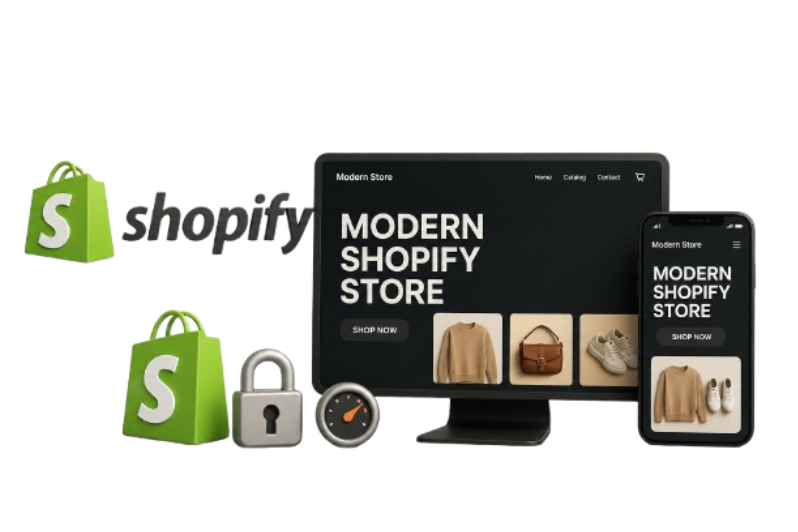
A Shopify storefront in development — the theme, the product catalogue and the checkout behind it

Admissions open

Free demo class & counselling

Batch slots

  • Weekday
  • Evening
  • Weekend
Talk to a counsellor

Course overview

The Shopify course in Ludhiana that ends in a store you have built

If you are looking for a Shopify course in Ludhiana that focuses on practical e-commerce skills, techcadd offers a career-focused learning path for students, entrepreneurs, freelancers, business owners, and aspiring e-commerce professionals. Shopify is widely used to create and manage online stores, making practical knowledge of store setup, product management, themes, apps, payments, shipping, SEO, and store optimisation valuable for today’s e-commerce market.

The Shopify training in Ludhiana is designed to take learners from the fundamentals of Shopify to building and managing a professional online store. Students can learn how to configure a Shopify store, add products and collections, customise themes, integrate essential apps, manage orders and inventory, and understand Shopify SEO and e-commerce marketing.

The course is suitable for 12th-pass students, graduates, job seekers, freelancers, and business owners who want to develop practical Shopify and e-commerce skills. With hands-on learning and project-based practice, learners can build a portfolio while developing skills relevant to Shopify store management, e-commerce development, freelancing, and online business.

  • A real store built and launched
  • Liquid taught, so you are not stuck with the theme
  • Conversion optimisation with measured results

Curriculum

A path from first steps to shipped work

4 modules and 24 topics across 6–8 weeks, in the order they are taught. Each one closes with something that works before the next one opens.

4 learning modules01 / 04
Module 01 · Weeks 1–2

Store Setup & Catalogue

From an empty store to a complete, well-organised product catalogue.

Topics covered

  • Store configuration
  • Products & variants
  • Collections
  • Inventory
  • Product photography basics
  • Copywriting

Tools & libraries

  • Shopify
  • Canva

You finish with

A fully populated store with a structured catalogue and written product pages.

Module 02 · Weeks 3–4

Themes & Liquid Customisation

Customising beyond the theme settings — sections, snippets and Liquid templating.

Topics covered

  • Theme architecture
  • Liquid syntax
  • Sections & blocks
  • Custom snippets
  • Metafields
  • Responsive tuning

Tools & libraries

  • Liquid
  • Shopify CLI
  • Dawn theme

You finish with

A customised theme with sections you built rather than settings you toggled.

Module 03 · Weeks 5–6

Payments, Shipping & Operations

The operational reality — getting paid, shipping goods and handling what goes wrong.

Topics covered

  • Payment gateways
  • Shipping rules
  • Taxes
  • Order workflow
  • Returns & refunds
  • Apps & integrations

Tools & libraries

  • Shopify Payments
  • Razorpay
  • Shiprocket

You finish with

A store processing real test orders end to end, including a refund.

Module 04 · Weeks 7–8

Marketing & Conversion

Traffic, abandoned carts and the changes that lift conversion rate measurably.

Topics covered

  • Shopify SEO
  • Email & SMS flows
  • Abandoned cart recovery
  • Upsells & bundles
  • A/B testing
  • Analytics

Tools & libraries

  • Klaviyo
  • Meta Pixel
  • Google Analytics
  • Judge.me

You finish with

A launched store with recovery flows running and a measured conversion improvement.

What you learn

What you’ll learn in the Shopify course

A practical Shopify course in Ludhiana should help you move from understanding the basics of e-commerce to confidently creating and managing an online store. At techcadd, learners can focus on practical concepts that are useful for employment, freelancing, entrepreneurship, and e-commerce projects.

  1. Shopify Fundamentals

    You will begin with the fundamentals of Shopify and understand how the platform works. This includes learning about Shopify plans, store structure, dashboards, settings, domains, storefronts, and the basic workflow involved in launching an e-commerce business.

  2. Shopify Store Setup

    You will learn how to set up and configure a Shopify store from the beginning. This can include store information, currency, basic settings, navigation, menus, checkout configuration, customer accounts, and other essential settings required for a professional online store.

  3. Product & Collection Management

    Product management is an important part of every e-commerce store. You can learn how to add products, write product descriptions, upload images, organise variants, manage pricing and inventory, and create collections. You will also understand how product organisation can make it easier for customers to browse and purchase products.

  4. Shopify Themes & Store Design

    The course can introduce you to Shopify themes and storefront design. You will learn how to select an appropriate theme, customise sections, create an attractive homepage, organise menus, design product pages, and improve the overall customer experience. You can also learn the fundamentals of responsive design so that your store works across desktops, tablets, and mobile devices.

  5. Shopify Apps & Integrations

    Shopify’s ecosystem includes applications that extend store functionality. You will learn how to identify suitable apps and understand their role in areas such as reviews, marketing, email, customer support, analytics, shipping, product discovery, and store optimisation. The focus should be on selecting useful applications rather than installing unnecessary apps that can make a store complicated or negatively affect performance.

  6. Payments, Shipping & Orders

    You will understand the operational side of running a Shopify store. This includes learning about payment configuration, shipping settings, order processing, fulfilment, refunds, customer information, and basic inventory management. These skills can be particularly useful for students who want to manage an online store professionally or help businesses with day-to-day e-commerce operations.

  7. Shopify SEO

    Search engine optimisation is an important part of e-commerce. You can learn the fundamentals of Shopify SEO, including optimising product titles, descriptions, URLs, images, collections, internal links, and other on-page elements. You can also learn how keyword research can be applied to product and collection pages to improve their visibility in search engines.

  8. E-Commerce Marketing

    A Shopify store needs targeted traffic to generate sales. The course can introduce you to e-commerce marketing concepts such as social media promotion, content marketing, email marketing, search engine optimisation, paid advertising, and conversion-focused store optimisation. This makes Shopify particularly useful for learners who want to combine it with digital marketing skills.

  9. Analytics & Performance

    You will learn how to understand important e-commerce performance indicators. This can include traffic, product performance, orders, revenue, conversion-related metrics, and customer behaviour. Understanding analytics helps store owners and e-commerce professionals make decisions based on data rather than assumptions.

  10. Practical Projects & Portfolio Development

    The most valuable part of a Shopify training course in Ludhiana can be project-based learning. Instead of completing the course with only theoretical knowledge, you can work on a demo e-commerce store and practise setting up products, collections, navigation, themes, apps, SEO elements, payments, shipping, and marketing components. By completing practical projects, you can develop a portfolio that demonstrates your Shopify capabilities to employers, freelance clients, or potential business partners.

Tools you can learn to work with

  • Shopify
  • Shopify Theme Editor
  • Shopify App Store
  • Google Analytics
  • Google Search Console
  • Google Keyword Planner
  • Google Merchant Center
  • Google Ads
  • Meta Business Suite
  • Canva
  • Microsoft Clarity
  • Email marketing platforms

The overall objective is to help learners understand not just how to create a Shopify store, but how to manage, optimise, market, and continuously improve an e-commerce business.

Find your pace

What you can do, phase by phase

The Shopify syllabus in the order you meet it, and what you are able to do by the end of each stretch of it. Every row is a capability, not a topic you sat through.

Every capability in the Shopify syllabus, and the phase it is covered in
CapabilityFoundationsAppliedProfessional
Store configurationStore Setup & CatalogueCovered in FoundationsCovered in AppliedCovered in Professional
Products & variantsStore Setup & CatalogueCovered in FoundationsCovered in AppliedCovered in Professional
CollectionsStore Setup & CatalogueCovered in FoundationsCovered in AppliedCovered in Professional
InventoryStore Setup & CatalogueCovered in FoundationsCovered in AppliedCovered in Professional
Product photography basicsStore Setup & CatalogueCovered in FoundationsCovered in AppliedCovered in Professional
CopywritingStore Setup & CatalogueCovered in FoundationsCovered in AppliedCovered in Professional
Theme architectureThemes & Liquid CustomisationCovered in FoundationsCovered in AppliedCovered in Professional
Liquid syntaxThemes & Liquid CustomisationCovered in FoundationsCovered in AppliedCovered in Professional
Sections & blocksThemes & Liquid CustomisationCovered in FoundationsCovered in AppliedCovered in Professional
Custom snippetsThemes & Liquid CustomisationCovered in FoundationsCovered in AppliedCovered in Professional
MetafieldsThemes & Liquid CustomisationCovered in FoundationsCovered in AppliedCovered in Professional
Responsive tuningThemes & Liquid CustomisationCovered in FoundationsCovered in AppliedCovered in Professional
Payment gatewaysPayments, Shipping & OperationsNot yet covered in FoundationsCovered in AppliedCovered in Professional
Shipping rulesPayments, Shipping & OperationsNot yet covered in FoundationsCovered in AppliedCovered in Professional
TaxesPayments, Shipping & OperationsNot yet covered in FoundationsCovered in AppliedCovered in Professional
Order workflowPayments, Shipping & OperationsNot yet covered in FoundationsCovered in AppliedCovered in Professional
Returns & refundsPayments, Shipping & OperationsNot yet covered in FoundationsCovered in AppliedCovered in Professional
Apps & integrationsPayments, Shipping & OperationsNot yet covered in FoundationsCovered in AppliedCovered in Professional
Shopify SEOMarketing & ConversionNot yet covered in FoundationsNot yet covered in AppliedCovered in Professional
Email & SMS flowsMarketing & ConversionNot yet covered in FoundationsNot yet covered in AppliedCovered in Professional
Abandoned cart recoveryMarketing & ConversionNot yet covered in FoundationsNot yet covered in AppliedCovered in Professional
Upsells & bundlesMarketing & ConversionNot yet covered in FoundationsNot yet covered in AppliedCovered in Professional
A/B testingMarketing & ConversionNot yet covered in FoundationsNot yet covered in AppliedCovered in Professional
AnalyticsMarketing & ConversionNot yet covered in FoundationsNot yet covered in AppliedCovered in Professional

The full programme runs 6–8 weeks. Where you finish is a question of pace rather than of syllabus — everyone covers all of it.

The case for it

Your months should build more than a certificate.

A course is worth the time you give it only if you finish with work you can show and skills you can defend. That is the standard this programme is designed against.

12+Practical learning areasfrom fundamentals to delivery
  • You learn Shopify the way it is used in production, with the workflow, tooling and standards a working team expects. Nothing in the syllabus exists only to fill hours.

  • Sessions are hands-on. You do every example, break it, and fix it. Each module closes with a lab task that has to work before you move on.

  • Four shipped finished projects — the kind of work an interviewer can open, click through and question you on.

  • A structured final phase: portfolio review, profile cleanup, aptitude and role-specific practice, mock interviews and placement support.

Why this course

Why should you choose this course?

Six things we hold ourselves to for every Shopify batch that starts in Ludhiana.

  • 01

    Industry-focused curriculum

    Syllabus built around what Shopify teams actually ship — no filler modules, no theory that never reaches your hands.

  • 02

    Practical learning

    Every concept lands in the tool the same day. You work in Shopify during each class, not just in your notes.

  • 03

    Real-world projects

    Build with real requirements, real data and real problems — from the first task to a finished, reviewable deliverable.

  • 04

    Mentor guidance

    Trainers who work with Shopify daily review your work, your logic and your approach line by line.

  • 05

    Career preparation

    Resume, portfolio, aptitude rounds and interview practice built into the last phase of the course.

  • 06

    Placement support

    Interview referrals, mock rounds and continued doubt support after the course ends.

Eligibility

Who can do a Shopify course in Ludhiana

A Shopify course in Ludhiana is suitable for learners from different educational and professional backgrounds. You do not need to be an expert in coding or e-commerce to start learning Shopify. The platform is designed to make online store creation accessible, while professional Shopify training can help learners understand the complete process of building, managing, customising, and growing an e-commerce store.

  • 12th-Pass Students

    Students who have completed Class 12 can consider Shopify training as an early career skill. Instead of learning only theoretical concepts, students can develop practical knowledge of e-commerce and online business. A Shopify course can introduce them to store creation, product listing, theme customisation, order management, basic SEO, apps, and online selling — skills that can later support careers in e-commerce, digital marketing, Shopify store management, or freelancing.

    Start early
  • Graduates Looking for Job Opportunities

    Graduates from BBA, BCA, B.Com, BA, B.Sc., or other backgrounds can learn Shopify to add an industry-relevant skill to their resumes. Employers increasingly look for candidates who can work with digital platforms and understand online business operations. Shopify training can help graduates develop practical experience instead of relying only on academic qualifications.

    Any stream
  • Students from Non-Technical Backgrounds

    You do not necessarily need an IT degree to learn Shopify. Students from commerce, management, arts, or other non-technical backgrounds can learn the fundamentals through structured training. The focus can be on understanding store functionality, product management, themes, apps, customer experience, and e-commerce operations rather than advanced programming.

    No IT degree needed
  • Aspiring Freelancers

    Shopify skills can also be useful for people planning to start freelancing. Businesses may need professionals who can create Shopify stores, upload products, customise themes, install and configure apps, improve store presentation, and provide ongoing store support. A Shopify training course in Ludhiana can give beginners practical projects that help them understand how real client requirements work.

    Turn it into income
  • Entrepreneurs and Business Owners

    If you already sell products offline or through social media, learning Shopify can help you understand how to establish a dedicated online store. Business owners can learn how to organise products, create collections, manage orders, configure payments and shipping, and improve the customer buying journey. This can be particularly useful for local Ludhiana businesses looking to expand beyond their physical customer base.

    Take it online
  • Digital Marketing Learners

    Shopify and digital marketing work closely together. Learners who already understand SEO, social media marketing, Google Ads, Meta Ads, or content marketing can add Shopify knowledge to their existing skill set. This combination can help them understand how traffic generated through marketing campaigns ultimately converts through an e-commerce website.

    Pairs with marketing
  • Job Seekers Wanting a Practical Skill

    If you are currently searching for employment and want to build a practical digital skill, Shopify can be an option worth considering. Training can help you develop hands-on experience with store setup and management, giving you projects that can be demonstrated during interviews or added to a professional portfolio.

    Something to show
  • Existing Web Designers and Developers

    Web designers and developers can also benefit from Shopify training. Those familiar with HTML, CSS, or JavaScript may find it easier to understand Shopify’s customisation environment. Shopify knowledge can expand the services they offer to clients and create opportunities in e-commerce website development and store maintenance.

    Widen your services
  • Professionals Planning a Career Change

    Working professionals who want to move into e-commerce, web development, digital marketing, or freelancing can use Shopify training to build a new skill without necessarily starting from an advanced technical level. A structured course can provide a clearer learning path and practical exposure.

    A way across
  • Anyone Interested in E-Commerce

    Most importantly, Shopify is suitable for anyone genuinely interested in learning how online stores work. Whether your goal is to get a job, start freelancing, build an online business, support an existing business, or develop e-commerce expertise, learning Shopify can provide a practical foundation.

    Open to all

What you actually need before day one

6–8 weeks · Classroom & online batches

  • A laptop or desktop — we help you set it up in the first session
  • A stable internet connection for the online batches
  • None. Advanced coding is not required for the fundamentals; basic HTML, CSS or JavaScript only helps once you reach advanced theme customisation, and is introduced as needed.
  • Basic English reading — the tools and their documentation are in English
  • About 6-8 hours a week outside class for practice
  • Willingness to finish the lab task before the next class

For learners in Ludhiana, choosing a local Shopify institute in Ludhiana with practical training, projects, updated tools, and career-oriented guidance can make the learning process more useful. Before enrolling, compare the curriculum, hands-on training, trainer expertise, project work, course duration, and career support offered. Ask about Shopify

Technology ecosystem

One discipline.
A mesh of real tools.

Shopify is the centre. These are the tools you use around it in a working team.

  • Commerce platform
  • Theme templating
  • Local theme development
  • Email & SMS flows
  • Payments in India
  • Shipping & fulfilment
  • Ad tracking
  • Reviews & social proof
  • ShopifyCommerce platform
  • LiquidTheme templating
  • Shopify CLILocal theme development
  • KlaviyoEmail & SMS flows
  • RazorpayPayments in India
  • ShiprocketShipping & fulfilment
  • Meta PixelAd tracking
  • Judge.meReviews & social proof

Hands-on projects

Projects you actually ship,
not just follow along with.

Each one lands in your portfolio with the working files, the process and something a reviewer can open.

Capstone project

D2C Brand Store Launch

A complete Shopify launch: catalogue and copy, a Liquid-customised theme with custom sections, live payments and shipping, review collection, Klaviyo welcome and abandoned-cart flows, pixel tracking, and a post-launch report with conversion rate and average order value.

  • Liquid
  • Klaviyo
  • Payments
  • CRO
Difficulty
Advanced
Status
Live store
View project brief

Certification

Get certified in Shopify

A techcadd Shopify certificate, and the credential that matters more in e-commerce: live stores you built, with the conversion and checkout work you did on them documented.

  • Course completion certificate

    Issued in your name on completion of the Shopify syllabus, with a reference number an employer can verify with us.

  • Project certificate

    A separate certificate for the capstone you submit, naming the project so the work is attached to the credential.

  • Internship letter

    Students who complete the live-project phase receive an internship letter covering the duration and the work delivered.

  • Portfolio you own

    Every file, repository and deployed link stays yours — the part of the credential a reviewer can actually open.

techcadd has been training in Ludhiana since 2007. The certificate carries that record; the Shopify work you did carries the rest.

Course completion

This is to certify that

has successfully completed the Shopify programme

Shopify Development Course

Ref TC-XXXX-XXXX
Project & internship

This is to certify that

for project work delivered under supervision in Ludhiana

Shopify capstone

Ref TC-PRJ-XXXX

Where it takes you

Where this course takes you

The route from your first module to the roles Shopify opens — and the work that has to exist at each step.

  1. 01Learning
  2. 02Projects
  3. 03Portfolio
  4. 04Industry readiness
  5. 05Career opportunities
  • Shopify Developer

    Build and customise stores for brands and agencies.

  • E-commerce Manager

    Run catalogue, operations and growth for an online store.

  • CRO Specialist

    Improve conversion rate with tested changes.

  • Store Owner

    Launch and operate your own D2C brand.

  • Shopify Partner

    Build a services business around store builds and support.

  • E-commerce Marketer

    Drive traffic and retention for online retail.

Salary outlook

What Shopify skills pay

Ludhiana is a manufacturing and export city discovering direct-to-consumer selling. That is the whole opportunity here, and it favours people who can build and sell rather than only build.

Indicative annual packages by role and market
RoleLudhiana & PunjabDelhi NCR & BengaluruRemote & freelance
Shopify DeveloperEntry₹2.0–4.0 LPA₹3.6–8 LPA₹20k–70k / store
E-commerce ManagerEntry to mid₹2.6–5.0 LPA₹4.5–10 LPA₹25k–80k / month
CRO SpecialistEntry to mid₹3.0–5.5 LPA₹5–12 LPA₹30k–1L / project
Shopify Partner / ConsultantMid (2–4 yrs)₹5–9 LPA₹9–18 LPA₹60k–2.5L / project

Ranges are indicative, drawn from what our own students report and from openings we see through the placement cell. Actual offers depend on your portfolio, the interview and the company — nobody can promise you a number, and we do not.

  • Shopify developer, e-commerce manager, CRO specialist and Shopify Partner or consultant. A good number of our students use it to launch their own store instead — often for a family manufacturing or trading business that has never sold direct.

  • Store building alone plateaus. What keeps growing is conversion work and marketing: a consultant who can raise a store's conversion rate is paid on results rather than on hours.

  • Very. Shopify builds and CRO audits are contracted globally, and the Shopify Partner programme is a genuine route to recurring revenue from Ludhiana.

  • Hosiery, garment and textile units moving into direct-to-consumer selling; bicycle and auto-parts firms building spare-part stores; food, handicraft and home-goods brands; existing e-commerce sellers on marketplaces wanting their own storefront; plus the agencies serving all of them.

  • Not academic, but it is genuinely useful alongside a BBA or MBA — and it is the one course here that can turn into a business rather than a job.

Why this programme

Why choose a Shopify course in Ludhiana

Choosing the right Shopify course in Ludhiana can help you develop practical e-commerce skills that go beyond simply learning how to create an online store. A structured Shopify training program can give you an understanding of how an e-commerce website is planned, built, managed, optimised, and maintained in a real business environment.

  1. Learn a Practical E-Commerce Skill

    Shopify is a popular platform for businesses that want to establish an online presence without building an entire e-commerce system from scratch. Learning Shopify gives students practical exposure to store setup, product management, collections, themes, navigation, apps, payments, shipping, orders, and customer experience. For students and job seekers in Ludhiana, this can be a useful addition to their existing qualifications — working on practical store-building activities rather than learning only theoretical concepts.

  2. Build Your Own Online Store

    One of the biggest advantages of learning Shopify is the ability to apply your knowledge directly. During practical training, learners can work towards creating a functional online store, understanding the complete journey from selecting products and creating collections to designing the storefront and preparing it for customers. This is particularly useful for aspiring entrepreneurs — if you have a clothing business, jewellery brand, handicraft business, beauty products, home products, or another product-based business in Ludhiana, Shopify can provide a structured platform for taking it online.

  3. Develop Freelancing Opportunities

    Shopify knowledge can also support a freelancing career. Businesses often require assistance with store creation, product uploads, theme customisation, store maintenance, app integration, and basic optimisation. Students who complete practical projects can use those projects as examples of their capabilities when approaching potential clients. With additional skills in SEO, digital marketing, graphic design, or web development, Shopify can become part of a broader freelance service offering.

  4. Combine Shopify with Digital Marketing

    An online store needs more than attractive design. It also needs visitors and conversions, which makes Shopify particularly valuable when combined with digital marketing skills. Learners can understand how SEO, social media, paid advertising, content, email marketing, and conversion optimisation work alongside an e-commerce website. Someone who understands both Shopify and digital marketing can potentially provide more complete solutions to businesses than someone who knows only one area.

  5. Suitable for Different Career Goals

    A Shopify course is not limited to one career path. Depending on your interests and additional skills, it can support opportunities related to e-commerce operations, Shopify store management, e-commerce website development, digital marketing, web design, freelancing, and entrepreneurship. The right training should therefore focus on practical learning rather than simply teaching platform features — students should get opportunities to create stores, solve common e-commerce problems, experiment with themes and apps, and understand how a professional store is managed.

  6. Learn in a Local Training Environment

    For students searching for Shopify classes in Ludhiana, local classroom or instructor-supported training can provide an opportunity to ask questions, receive feedback, and learn through guided practice. This can be particularly helpful for beginners who may find self-learning difficult when they encounter technical or store-management issues. A good training program should also keep its curriculum aligned with current Shopify features and e-commerce practices, because online selling continues to evolve.

  7. Create a Portfolio While Learning

    Portfolio projects can make your learning more valuable. Instead of finishing a course with only a certificate, students can work on practical Shopify projects that demonstrate what they can actually do. A portfolio may include a complete demo store, customised homepage, product catalogue, collection structure, responsive design, essential app integrations, SEO optimisation, and an e-commerce marketing plan — something concrete to discuss during interviews or with freelance clients.

  8. A Career-Focused Learning Approach

    The purpose of professional Shopify training in Ludhiana should not simply be to teach learners where to click inside the Shopify dashboard. It should help them understand why different features are used and how they contribute to an online business. With practical assignments, guided projects, problem-solving exercises, and exposure to real-world e-commerce workflows, learners can gradually develop confidence in working with Shopify.

Whether your goal is to become a Shopify store manager, start freelancing, launch your own online business, or strengthen your existing digital marketing skills, a structured Shopify course can provide a practical starting point for building an e-commerce-focused career.

Get started

Join the Shopify course at techcadd

Build practical Shopify skills for your e-commerce career.

  1. What you will be able to do

    Ready to learn how to create, manage, customise, and optimise professional online stores? The Shopify Course in Ludhiana at techcadd is designed for students, graduates, job seekers, freelancers, entrepreneurs, and business owners who want practical e-commerce skills.

  2. What the curriculum covers

    A career-focused curriculum covering Shopify store setup, product management, themes, apps, payments, shipping, Shopify SEO, analytics, e-commerce marketing, and practical projects.

  3. Before you enrol

    Course duration depends on the depth of training, class frequency, projects, and the additional e-commerce topics included. Confirm the current curriculum, duration, mode, fees, and batch timings directly with techcadd.

Future scope

The road ahead for Shopify

A course ends; the field does not. Here is the honest version of what the next few years look like for Shopify — where the roles go, and what is shifting underneath them while you learn.

  1. Year 0–1

    Get in on proof of work

    Entry roles such as Shopify Developer open as soon as you have projects that run. At this stage nobody is asking about your marks — they are asking you to walk through something you built.

  2. Year 2–4

    Specialise and get paid for it

    The generalists plateau; the specialists do not. Depth in one part of Shopify — the part your first job leans on hardest — is what moves you towards e-commerce manager work.

  3. Year 5+

    Own the decisions

    Architecture, standards, hiring and mentoring. The technical skill is assumed by now; what you are paid for is judgement, and judgement only comes from having shipped things that mattered.

Sectors hiring for this skill set

  • IT services
  • Product startups
  • Banking & fintech
  • Healthcare
  • E-commerce
  • Manufacturing
  • EdTech
  • Government & PSUs

The comparison

Why students pick techcadd for Shopify

Every institute in Ludhiana claims industry training and placement support. These are the differences you can actually check on a demo visit — ask any of them of anyone, including us.

techcadd compared with a typical institute, feature by feature
What to ask abouttechcaddTypical institute
Who teachesTrainers who still do Shopify work outside the classroomFull-time faculty teaching from a fixed deck
1-on-1 classesOne-to-one teaching available on every course — the pace is yours, and your work is looked at by nameOne group class moving at one pace, whoever that pace happens to suit
Project work5 real projects plus a capstone you deploy and defendGuided exercises copied from the board
CurriculumReviewed every batch against what working teams shipUpdated when the printed syllabus is reprinted
How a module endsA lab task that has to run before you move onNotes to revise before an exam
Doubt supportTrainer sits with your code; open lab hours between classesAsk at the end of class if there is time left
What you leave withCompletion certificate, project certificate, internship letter — all verifiableOne printed certificate
After the coursePortfolio review, mock interviews, referrals, continued doubt supportThe course ends and so does the contact

Written about the market, not about any particular institute in it. Visit two or three, sit through a demo class at each, and ask all eight of these questions — that is the only version of this table worth trusting.

Student Voices

What Shopify learners say

Feedback from students who completed the Shopify programme at techcadd Ludhiana.

Google Reviews4.8from 181 Google reviewsGoogle Verified
A

Aman

Shopify / Ludhiana

The Shopify training was very practical. I started with zero knowledge and learned how to create a complete online store, add products and customise the theme. The step-by-step approach made it easy to understand.

Posted on Google
S

Simran

Shopify / Ludhiana

I was from a non-technical background and was initially worried that Shopify would be difficult. The concepts were explained clearly and I got enough practice to build my own demo store.

Posted on Google
H

Harpreet

Shopify / Khanna

I joined the Shopify course because I wanted to explore freelancing. Working on practical projects helped me understand what clients actually need from a Shopify store.

Posted on Google
M

Manpreet

Shopify / Ludhiana

The course gave me a much better understanding of how an e-commerce website works. Product management, collections, themes, apps and store settings were some of the areas I found particularly useful.

Posted on Google
N

Navjot

Shopify / Ludhiana

I was looking for a skill that I could add to my existing digital marketing knowledge. Shopify training helped me understand how marketing and an online store work together.

Posted on Google
R

Riya

Shopify / Jalandhar

What I liked most was getting hands-on practice instead of only watching demonstrations. By the end of the training, I had worked on a complete Shopify store project.

Posted on Google
G

Gurpreet

Shopify / Ludhiana

I wanted to understand how I could take my existing business online. The Shopify classes helped me understand products, collections, payments, shipping and the basic customer journey.

Posted on Google
K

Karan

Shopify / Ludhiana

The training was explained in a simple way and I could ask questions whenever I got stuck. The practical sessions made the learning process much more comfortable.

Posted on Google
J

Jaspreet

Shopify / Chandigarh

Creating a Shopify store as a project was very helpful. It gave me something practical to show when discussing my skills and helped me understand the complete store-building process.

Posted on Google
P

Priya

Shopify / Ludhiana

I joined to learn about e-commerce and ended up learning much more about store design, SEO, apps and online selling. It was a useful skill to add alongside my other digital skills.

Posted on Google
A

Aman

Shopify / Ludhiana

The Shopify training was very practical. I started with zero knowledge and learned how to create a complete online store, add products and customise the theme. The step-by-step approach made it easy to understand.

Posted on Google
S

Simran

Shopify / Ludhiana

I was from a non-technical background and was initially worried that Shopify would be difficult. The concepts were explained clearly and I got enough practice to build my own demo store.

Posted on Google
H

Harpreet

Shopify / Khanna

I joined the Shopify course because I wanted to explore freelancing. Working on practical projects helped me understand what clients actually need from a Shopify store.

Posted on Google
M

Manpreet

Shopify / Ludhiana

The course gave me a much better understanding of how an e-commerce website works. Product management, collections, themes, apps and store settings were some of the areas I found particularly useful.

Posted on Google
N

Navjot

Shopify / Ludhiana

I was looking for a skill that I could add to my existing digital marketing knowledge. Shopify training helped me understand how marketing and an online store work together.

Posted on Google
R

Riya

Shopify / Jalandhar

What I liked most was getting hands-on practice instead of only watching demonstrations. By the end of the training, I had worked on a complete Shopify store project.

Posted on Google
G

Gurpreet

Shopify / Ludhiana

I wanted to understand how I could take my existing business online. The Shopify classes helped me understand products, collections, payments, shipping and the basic customer journey.

Posted on Google
K

Karan

Shopify / Ludhiana

The training was explained in a simple way and I could ask questions whenever I got stuck. The practical sessions made the learning process much more comfortable.

Posted on Google
J

Jaspreet

Shopify / Chandigarh

Creating a Shopify store as a project was very helpful. It gave me something practical to show when discussing my skills and helped me understand the complete store-building process.

Posted on Google
P

Priya

Shopify / Ludhiana

I joined to learn about e-commerce and ended up learning much more about store design, SEO, apps and online selling. It was a useful skill to add alongside my other digital skills.

Posted on Google

Real, unedited feedback from techcadd learners on Google.

Frequently asked questions

Questions before you enrol

The 15 things people ask most often about the Shopify course at techcadd Ludhiana.

  • A Shopify course in Ludhiana is a practical training program that teaches students how to create, customise, manage, and optimise an online store using Shopify. It can cover store setup, products, themes, apps, payments, shipping, SEO, analytics, and e-commerce marketing.

  • Students, graduates, job seekers, freelancers, entrepreneurs, business owners, web designers, and digital marketing learners can join a Shopify course. Beginners can also start learning Shopify without an advanced technical background.

  • Yes. Shopify is designed to simplify many aspects of creating and managing an online store. A structured Shopify training program can help beginners learn the platform step by step through practical exercises and projects.

  • No, advanced coding knowledge is not essential for learning the fundamentals of Shopify. However, basic knowledge of HTML, CSS, or JavaScript can be useful for learners who want to explore advanced theme customisation and development.

  • A comprehensive Shopify course can cover store creation, the Shopify dashboard, products, collections, inventory, themes, navigation, apps, payments, shipping, order management, Shopify SEO, analytics, e-commerce marketing, and store optimisation.

  • Yes. Shopify skills can be used for freelance services such as store setup, product listing, theme customisation, app configuration, store maintenance, and basic e-commerce optimisation. Practical projects can also help learners develop a portfolio for approaching potential clients.

  • Yes. Shopify provides tools for creating and managing an online storefront. Training can help you understand how to organise products, configure store settings, manage orders, customise the storefront, and create a better online shopping experience.

  • Yes. Shopify and digital marketing can complement each other. SEO, Google Ads, social media marketing, content marketing, email marketing, and conversion optimisation can help attract potential customers to an online store.

  • Depending on the course curriculum, learners may work with Shopify, the Shopify Theme Editor, the Shopify App Store, Google Analytics, Google Search Console, Google Keyword Planner, Canva, Google Merchant Center, Meta Business Suite, Google Ads, and other e-commerce tools.

  • The duration depends on the institute and curriculum. A practical course may range from several weeks to a few months depending on the depth of training, class frequency, projects, and additional e-commerce topics included.

  • Yes. Students looking for Shopify training in Ludhiana, Shopify classes in Ludhiana, or a Shopify institute in Ludhiana can compare local training providers based on curriculum, practical projects, trainer experience, learning mode, course duration, and career support.

  • A Shopify course can help develop relevant skills for roles involving e-commerce operations, Shopify store management, e-commerce support, web design, digital marketing, and freelance Shopify services. Employment depends on your skills, portfolio, experience, and the requirements of individual employers.

  • Yes. Shopify training can be suitable for graduates from commerce, management, arts, science, and other backgrounds. Learners can begin with the fundamentals and gradually develop practical e-commerce skills.

  • Look for a course with an updated curriculum, practical assignments, live or project-based learning, experienced trainers, portfolio development, and relevant e-commerce tools. It is also useful to check the course duration, mode of training, class structure, and career guidance before enrolling.

  • A certificate can demonstrate that you completed training, but practical skills and demonstrable work are usually more important when applying for e-commerce-related roles. Building Shopify projects and a portfolio can help you demonstrate what you can actually do.

Build practical skills

Join the Shopify course in Ludhiana at techcadd

Send your enquiry and the techcadd team will call you back about the Shopify course — current curriculum, duration, training mode, fees, batch timings and what the project work involves.

  • CourseShopify Development Course
  • Duration6–8 weeks
  • ModeClassroom & online batches
  • Centretechcadd Ludhiana

Would rather talk now? +91 98881 22667

Taken from the page you are on — this enquiry reaches the Shopify counsellor directly.

Loading the security check…

We never share your number. Expect a call within working hours.

Ready to get started?

Start building your career today.

Talk to a counsellor today. One call is usually enough to know which track fits your degree, your schedule and the job you want.

Call now+91 98881 22667
  • Free career counselling
  • No registration fee
  • Placement support included
Services